
If there’s one thing I learned from cooking with Abuela and Mami, it’s that good seasoning doesn’t depend on excess salt. And if there’s one thing I’ve learned from my doctor, it’s that I need to chill on the salt. Adobo has always been about adding flavor with just a couple of shakes. This low-sodium adobo keeps those familiar flavors– garlic, onion, cumin, and herbs– while reducing salt, making it easier to season everyday meals without sacrificing the taste we grew up with.
Whether you’re following a lower-sodium diet or simply want more control over your seasoning, this homemade adobo lets you enjoy the familiar flavors of Puerto Rican cooking while using less sodium than many traditional recipes and store-bought blends.
Disclaimer
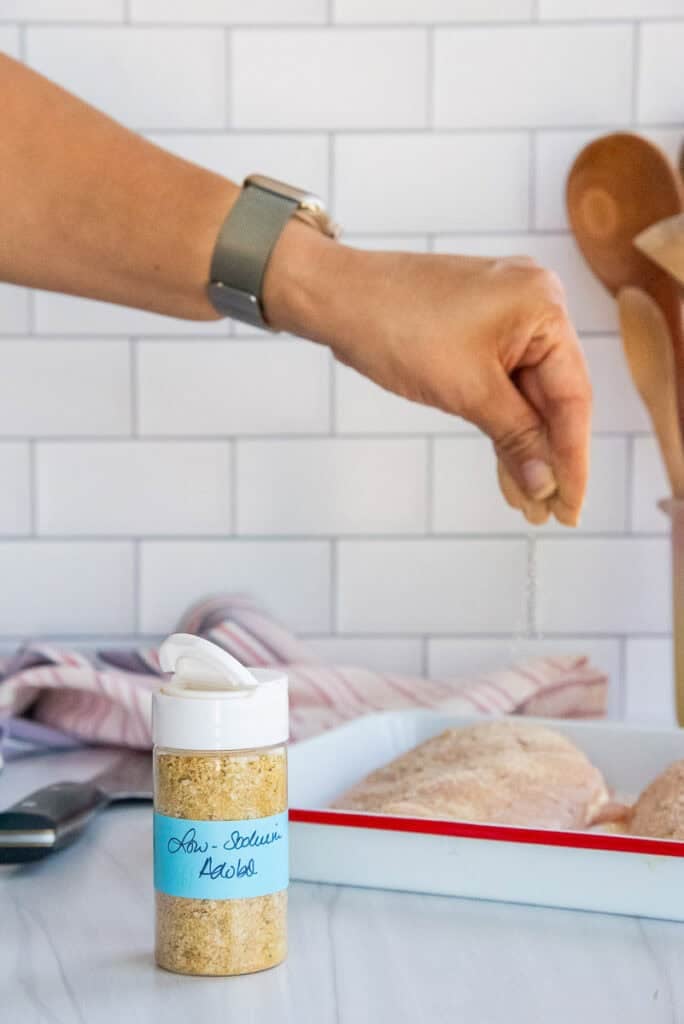
Medical Note *you should definitely read this*: This recipe is developed with guidance from my dear friend and Registered Dietitian Nutritionist and Licensed Dietitian, Marisa Moore. It contains less sodium than traditional adobo seasoning. It is not intended to diagnose, treat, cure, or prevent any medical condition. If you’re following a physician-prescribed sodium restriction because of kidney disease, heart failure, hypertension, or another medical condition, consult your healthcare provider or registered dietitian to determine whether this seasoning fits your dietary needs.
Sodium needs also vary from person to person. Always season foods according to your individual dietary recommendations. And check out Marisa’s site while you’re at it.
What Makes This Low-Sodium Adobo?
Adobo is one of the most recognizable seasonings in Puerto Rican cooking. Besides my seasoned salt, adobo is the first thing I reach for when seasoning proteins, veggies, or beans. However, very few people make their adobo at home, which is wild to me, since store-bought versions rely heavily on salt and additives to deliver flavor.
Instead of depending on salt alone, this low-sodium adobo builds layers of flavor with garlic, onion, oregano, cumin, black pepper, turmeric, and crystallized lemon. Those ingredients create the bold aromatic flavor that makes adobo a pantry staple while keeping the sodium content much lower than many store-bought blends.
At 94 milligrams of sodium per ½-teaspoon serving (or 47 milligrams per ¼ teaspoon, depending on the serving size you choose), this seasoning qualifies as low-sodium under FDA guidelines, which define a low-sodium food as containing 140 milligrams of sodium or less per serving. Thankfully, we still have the guidance to link to.
Why Make Adobo Seasoning At Home?
Making your own adobo gives you complete control over what goes into it. This homemade version doesn’t rely on preservatives, anti-caking agents, or unnecessary fillers. Every ingredient adds flavor so you can season your favorite Caribbean dishes without drowning them with salt.
Ingredients You Need For Low-Sodium Adobo
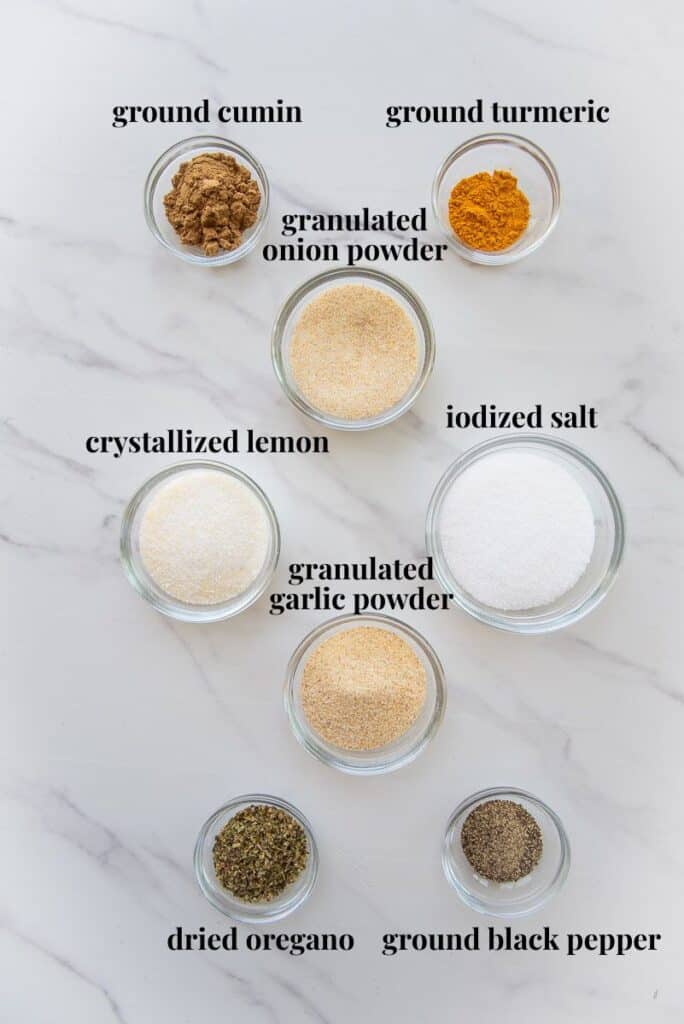
To make low-sodium adobo seasoning at home, you’ll need iodized salt, crystallized lemon, granulated garlic powder, granulated onion powder, dried oregano, ground black pepper, ground cumin, ground mustard (not pictured because it’s optional), and ground turmeric.
I’m using crystallized lemon to replace most of the salt found in traditional adobo recipes because its high acidity wakes up the same taste receptors that salt does. Lemon basically tricks your taste buds into thinking they’re tasting salt.
You can find crystallized lemon online or in the baking aisle near the sugar products.
How To Make Low-Sodium Adobo
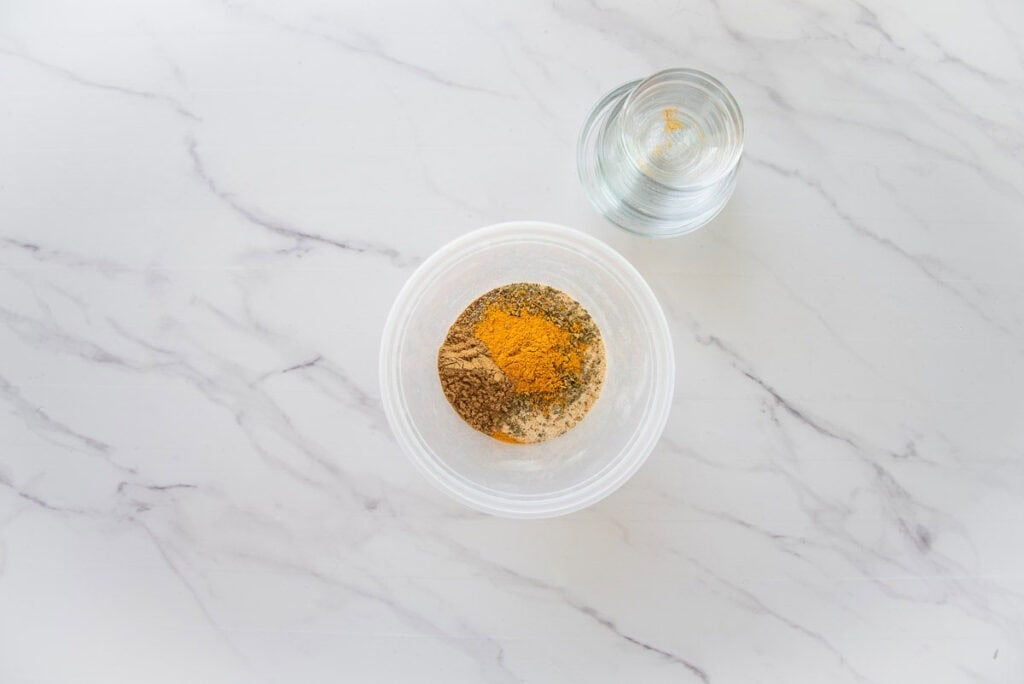
The hardest part of making low-sodium adobo is measuring out the ingredients. Once you do that, just add everything to a medium food storage container.
You may wonder why I, a staunch kosher salt-user, am calling for iodized salt in this recipe. Great question, my friend. Kosher salt, like sea salt, has larger, irregularly-shaped grains or flakes, which don’t blend well. Iodized salt, on the other hand, has finer, uniform crystals that blend evenly with the rest of the spices.
The added iodine, an essential nutrient that promotes good thyroid health, is another benefit of using iodized salt here. If you have an overactive thyroid like I do, you may want to consult your endocrinologist to make sure this recipe is safe for you to consume.
Chef’s Tips For Building Flavor With Less Sodium
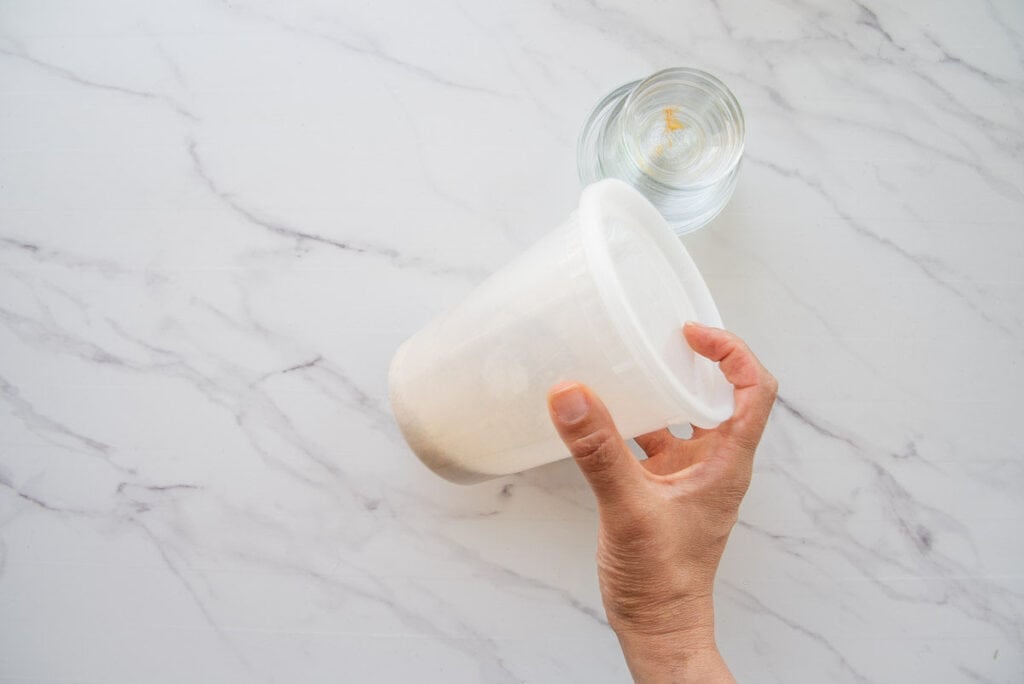
After adding the spices to the container, snap the lid on and shake for 30 seconds to a minute to combine. Your adobo is now ready to use!
Using a low-sodium adobo when cooking is only the beginning, though. Here are my tips on how to incorporate flavor without the salt:
- Season your food earlier: seasoning food, especially proteins, ahead of time gives the food time to absorb the seasoning. That equates to more flavorful food after cooking.
- Use citrus: remember that the acidity tricks your taste receptors into thinking you’re eating salt, and citrus also triggers your salivary glands to kick in– something else that salt does.
- Brown your proteins: color=flavor. Browning the meat causes a Maillard reaction, which creates savory flavor.
- Don’t oversalt while cooking: the reasons chefs tell you to “adjust the seasonings” after the recipe is finished is because you can always add more salt, but you can’t take it away. Even with this low-sodium adobo, season sparingly and finish salting just before you serve.
How To Use Puerto Rican Adobo
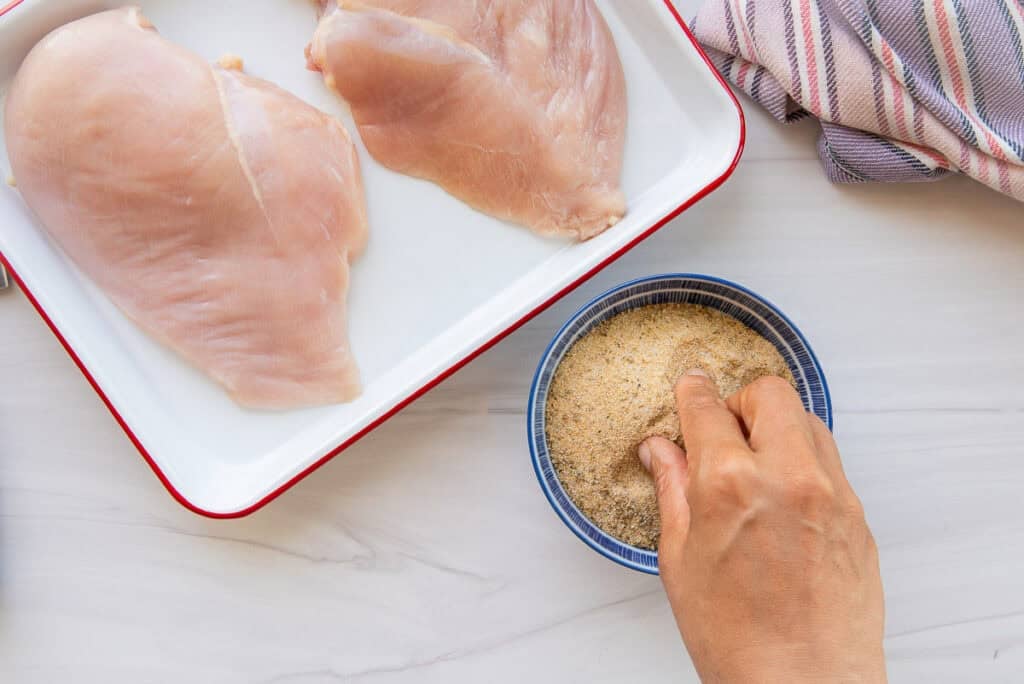
The serving size for this recipe is 1/2 teaspoon or 1g. This is different than what a recipe may call for. For example, if your recipe for chuletas fritas calls for a teaspoon of adobo for 4 chuletas, you’re not consuming all of that adobo because it’s split among four pieces of meat. You’ll generally use 1 teaspoon per pound of meat in most recipes.
If you heavily salt your food or use more than the recommended serving size, you’ll naturally increase the amount of sodium that you’re consuming. Just be mindful of that if you’re on a strict, low-sodium diet. And consult your doctor, because I care about you.
This recipe makes just under a cup of low-sodium adobo, which is enough to season a ton of dishes. Here are a few of the recipes you can use this seasoning blend in:
How To Store Homemade Adobo
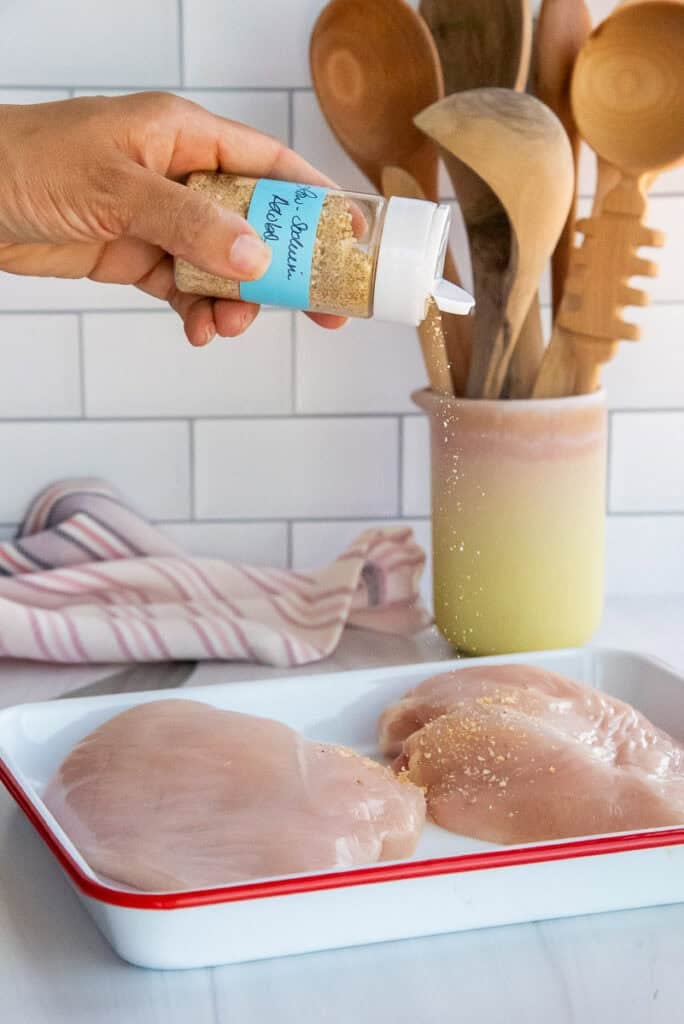
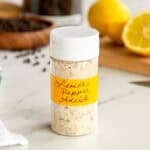
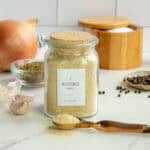
Use a funnel to transfer your low-sodium adobo to spice jars, but be sure to add a food-safe desiccant pack to the bottle with it. Desiccant packs absorb moisture, which can cause mold and clumping in your spice blends. You can also leave it in the same container you shook it up in. Spice jars are more “cooking-friendly,” though. Whatever container you choose, make sure to add those desiccant packs to the spice blend.
Store your adobo seasoning in a cool, dark, and dry area of your kitchen. A pantry, or spice cabinet, or drawer are what I recommend. Avoid storing any spice blends above or near heat sources like the stove or oven. Heat, light, and moisture will cause adobo to deteriorate and lose its potency. Moisture can also introduce mold or bacteria.
Low-Sodium Adobo FAQs
How long does homemade adobo last?
Stored in an airtight container away from heat and moisture, it maintains its best flavor for about six months.
Is homemade adobo healthier than store-bought?
Yes, because homemade seasoning lets you control the amount of salt and avoids many anti-caking agents, artificial colors, and preservatives commonly found in commercial blends.
Can I make it completely salt-free?
Yes. Omit the salt entirely and add salt separately while cooking to better control sodium intake.
Can I customize it?
Yes! Make spicy low-sodium adobo by adding 1/4-1/2 teaspoon of scotch bonnet pepper powder or cayenne to the mix. Switch up the citrus and replace crystallized lemon with crystallized lime. Or, you can add color by mixing in 1/2 teaspoon of ground annatto or saffron.
More Homemade Puerto Rican Seasonings
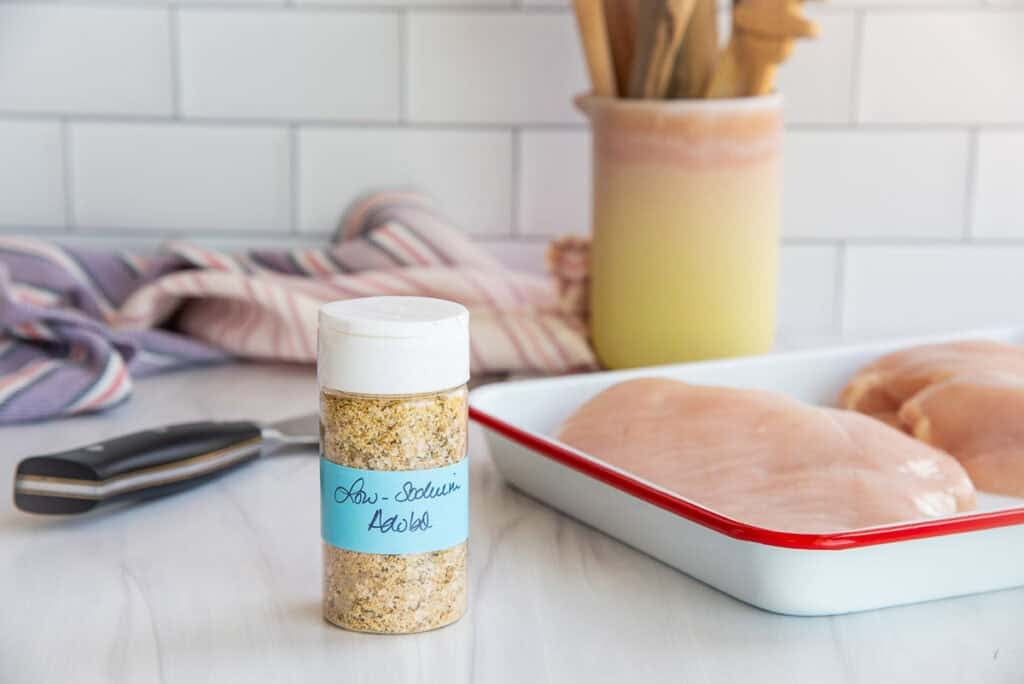
Now that you’re about to master low-sodium adobo, try adding more Puerto Rican seasonings and cooking bases to your spice cabinet.
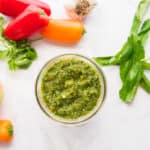
Sazón, sofrito, and traditional adobo are the most commonly used spice blends in the Puerto Rican kitchen. What I love most about them is that they’re all easy to make with ingredients that are usually kept in the pantry.
I love listening to my doctor– sike! I know he means well, but sometimes “diets” cause anxiety. This is not one of those times because I don’t miss the salt in this low-sodium adobo. I don’t feel like I’m sacrificing something for the good of my blood pressure, and that makes me happy. Making your own adobo lets you decide how much sodium goes into your cooking, which should make you happy.
Add this flavorful seasoning blend to your spice cabinet and let me know what you think.
Low-Sodium Adobo Seasoning Blend
at Sense & EdibilityIngredients
- 4 tablespoons crystallized lemon
- 3 tablespoons granulated garlic powder
- 2 1/2 tablespoons granulated onion powder
- 2 tablespoons iodized salt
- 1 tablespoon dried oregano
- 2 teaspoons ground cumin
- 1 teaspoon ground black pepper
- 3/4 teaspoon ground mustard optional
- 1/2 teaspoon ground turmeric
Instructions
Mix the Low-Sodium Adobo
- Add the crystallized lemon, granulated garlic and onion powders, iodized salt, dried oregano, ground cumin, black pepper, ground mustard, and ground turmeric to a medium food storage container that has a lid.
- Place the lid on the food container securely and shake the ingredients together for 30 seconds to one minute to combine.
Transfer to Spice Jars
- Use a funnel to transfer the adobo to spice jars, adding a desiccant pack to each spice jar to prevent moisture build-up.You can also store it in the same container you mixed it in. Be sure to add 2-3 desiccants packs to the container.
Store Up to Six Months
- Store low-sodium adobo in a cool, dark, and dry area of your kitchen for up to six months.
- Use as needed for recipes that call for adobo.
Notes
- Replace the crystallized lemon with crystallized lime or bitter orange.
- The ground mustard adds more savoriness, which mimics the taste of salt. You can omit it if you don’t have it.
- Omit the iodized salt and add it to recipes as you cook.
- Add 1/4-1/2 teaspoon cayenne or scotch bonnet pepper powder to make it spicy.
- Add more color with 1/2 teaspoon ground annatto or saffron.
- Use iodized salt to easy blend the adobo.
- If you prefer a powder-like adobo, pulse it 5 or 6 times in a small blender.
- Use the freshest spices and oregano that you can so your low-sodium adobo will last long.


This will make a great addition to our spice cabinet!
It sure will! This low-sodium adobo is saving my “pressures”, LOL! I’m glad you like it!