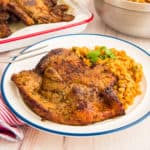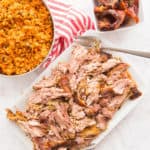
My pork chicharrones recipe is where Puerto Rican sabor meets Mexican-style indulgence. Juicy strips of pork belly with skin still attached get a punch of Puerto Rican flavor thanks to a brine of sofrito, adobo, and tangy vinegar. The well-known “Mexican-style” cut adds a further (and literal) frill to their crispy exterior. Whether you’re serving them as a decadent appetizer or turning them into the main course to serve with your favorite sides, this dish delivers serious crunch and even bigger flavor. Chicharrones, pronounced chee-chah-ROH-nes, is the plural form of chicharrón, pronounced chee-chah-ROHN. Roll the “r” if you can manage it, but don’t fret if your tongue doesn’t want to cooperate; I know you tried.
Chicharrón is the Spanish word for crispy, fried pork. The name translates to “crackling,” which is the sound you’ll hear when you chomp down on one. Pork chicharrones are a crispy, savory snack —and can even be an entrée—made from strips of deep-fried pork skin, often with some fat and meat still attached. I boil, brine, and then deep-fry these strips until they are crunchy yet still tender and juicy.
Which Country Are Chicharrónes From?
Many countries that were colonized by the Spanish have a chicharrón recipe in their cuisine.
Puerto Rican chicharrones are smaller and have less meat attached to them. Those chicharrones are most often made from pig skin, deep-fried until very crispy. If you’ve ever had Puerto Rican mofongo, that’s the style of chicharrones I’m referencing. Puerto Rican carne frita is a similar recipe of pork chunks that are equal parts fat and pork shoulder or butt.
Other Latin American versions of pork chicharrones – especially the Mexican chicharrones – are more substantial. Theirs are strips of pork fat with a little meat still attached. Other Caribbean and Spanish-influenced cuisines also feature some variation of chicharrones in their diets.
What Is The Difference Between Pork Rinds And Chicharrones?
In English, chicharrones are called “pork rinds” or “cracklings,” but these names usually refer more to the extra-crunchy, bubbly fried pork skins. The Latin American version usually has more meat attached to the skin than the US/English version does.
Latin American pork chicharrones also have a considerable punch of flavor when compared to pork rinds. Marinating, or seasoning, the meat makes all the difference.
What Do I Need To Make These Pork Chicharrones?

To make these pork chicharrones, you’ll need pork belly, yellow onion, garlic, white distilled vinegar, granulated sugar, sofrito, adobo, black pepper, sazón, and a bay leaf (optional). You also need a large caldero or pot to parboil the pork belly, a large enough container to brine the meat in, and a deep-fat fryer thermometer for accurate temperature readings when frying.
Plan to start this recipe early in the day or, even better, the evening before you plan to serve them. Brining is the key to maximum juiciness and flavor in pork chicharrones. It’s not a must, but you won’t be disappointed with the effort.
What Cut Of Pork Are Chicharrones Made From?
Chicharrones are traditionally made from pork belly because its rich layers of fat, meat, and skin crisp up so well when fried. Puerto Rican and Mexican recipes often feature pork belly or other meaty cuts, such as shoulder, for a chewier, heartier snack or meal.
Some versions of chicharrones use just the skin, especially in the American South. The skin-only recipe is more commonly used for pork rinds. It all depends on the style and region, but pork belly is my preferred cut of meat.
What Is The Best Meat For Chicharrones?

Chicharrones can be made with pork, chicken, or even fish!
I recommend using pork belly to achieve the crispiest, juiciest pork chicharrones, though. It has the perfect ratio of skin, fat, and meat that leaves you feeling satiated, but not, well, like a pig. Pork skin with a bit of fat works too, but it leaves your gut feeling unsettled after a few bites.
I buy my pork belly at my grocery store or a butcher. You can often find it near the ribs or the whole pork roasts in your butcher’s case. Mexican carnicerias are the perfect place to get pork belly on the cheap. Just go in and ask for “carne para chicharrones.” Impress them with your Spanish and they might hook you up with more meat. You’re welcome.
Rinse the pork belly under cold running water and pat it dry so you can handle it safely. Use a sharp chef’s knife and a much larger cutting board than I’m using here to score, not cut, the skin side and fat about 1/3 inch (approximately 1 cm) deep. Scoring the skin and fat is how you achieve even crispiness on your pork chicharrones.
Slice the belly slab into 1-inch (2.5cm) thick strips after scoring it.
How Do I Keep My Chicharrones From Being Dry?

Biting into a dry, dusty-tasting chicharrón is one of the most disappointing culinary experiences one can have. I avoid this disappointment by parboiling, then brining my pork belly strips in a flavorful concoction loaded with aromatics and acid.
Parboiling, which is the partial boiling of a food or protein, helps render excess fat while tenderizing the meat. If you were to deep-fry your seasoned pork belly, it would burn before it cooked through. It would also leave you with tough chicharrones. Parboiling your pork chicharrones in this liquid infuses flavor before frying, making them even more delicious.
Add water, adobo, sazón, oregano, white vinegar, black pepper, sugar, and bay leaf to the caldero or large pot. Stir the ingredients together and bring the liquid up to a boil over medium heat. Continue boiling for 1-2 minutes to fully dissolve the spices.

Add the onion, garlic, and sofrito to the boiling liquid and cook for 5 minutes to infuse the liquid with their flavor. Next, add the strips of pork belly to the pot, stirring them into the liquid to cover them. Cover the pot and cook the pork belly for 10 minutes.
Do I Have To Brine Them?

Turn the stove off and uncover the pot. Allow the contents to cool for 30 minutes (on or off the stove, it doesn’t matter). You need the liquid to cool substantially before you proceed.
You don’t have to brine the meat, but you’ll want to name your next kid after me for telling you to. Salt in the brine changes the meat’s protein structure, which allows it to absorb and retain more liquid. The more liquid the meat has before frying, the more it will have after. This contributes to pork chicharrones that are still juicy inside. Brining also enhances the meat’s natural flavor without making it overly salty.
Carefully transfer the meat and liquid to a food storage bin (like a Cambro) or a similar large container with a lid. Add the ice to the container and stir to incorporate. The ice cools the liquid faster, so everything doesn’t sweat as much once you cover and put the container in the fridge.
How Long Can I Brine The Pork Belly?

Brine the pork chicharrones in the marinade for at least 4 hours, but I really encourage you to go for a full 12 hours (or overnight). This maximizes the flavor in the meat. Don’t brine your pork for more than 24 hours, or it will become mushy instead of juicy.
Remove the pork strips from the brine and pat them dry with paper towels. Dry the space in between the cuts in the meat as well. The drier your chicharrones are, the crispier they’ll fry up. You can even return them to the fridge for a couple of hours to let that cold air further dry out the surface.
Allow the meat to sit at room temperature for about 20 minutes to warm up. You don’t want to fry the meat straight out of the fridge, or it will take longer (and the exterior may burn before the meat is cooked).
What Oil Should I Use to Fry My Chicharrones?

Now’s a great time to get out a caldero or pot (or your deep fryer) and start heating up the frying liquid. I like to fry pork chicharrones in lard because it has a high smoke point, and it adds even more pork flavor to the chicharrones. It’s also the way my mother used to fry hers. Deep-frying pork in liquid pork is what I consider to be heaven on earth. You can also use peanut, vegetable, or corn oil if you’re not as dramatic as I am.
Add your chosen fat to the pot and heat it over medium-high heat. Use a deep fryer thermometer to monitor the oil’s temperature. You can begin frying the pork chicharrones once the lard/oil reaches 365°F (185°C).
Add 3 or 4 strips of pork belly to the pot and fry them for 6 minutes or until they reach an internal temp of 150°F (65°C). Use tongs to remove them from the pot and drain them on a wire rack placed over a sheetpan to allow the fat to drain fully. Continue frying the remaining chicharrones in small batches to ensure they fry evenly.
Why Are My Chicharrones Chewy?

If your pork chicharrones are soft or chewy instead of crispy, they probably weren’t dry enough when you began frying them, or the oil wasn’t at the proper temperature when you began frying. You can test a strip or two, then make adjustments to the meat or oil as needed.
For extra crunch on your pork chicharrones, fry them a second time! Increase the oil temp to 375°F (190°C) after you’ve fried all of the chicharrones. Return them to the frying oil in batches of 3 or 4 and flash fry them for 3 minutes. This adds another dimension of crispiness to your chicharrones.
How Do I Serve Them?

You can serve pork chicharrones on their own with lime wedges to add some punch. You can also serve it as an entree with arroz con gandules, arroz con habichuelas, or Mexican-style with guacamole or your favorite salsa or hot sauce.
I usually make these as an entrée to serve with rice and beans, along with a nice garden salad, so I can stay healthy. L-O-freakin’-L.
Speaking Of “Healthy,” Are Chicharrónes Good Or Bad For Your Health?
Only your cardiologist can answer that question, my friend. Seriously, never rely on a food website for medical advice. Suffice it to say that eating pork belly deep-fried in lard every day does not contribute to a healthy diet (or arteries), but in moderation, I’m sure eating pork chicharrones is fine for your diet. I don’t recommend them if you’re not on a low-fat diet or watching those calories.
Again, I’m not a doctor or registered dietitian, so I can’t provide you with an educated medical or nutritional answer to this question.
How Do I Store and Reheat Leftover Pork Chicharrones?

To store leftover pork chicharrones:
Let the leftovers cool to room temp before storing them. This will prevent steam inside a closed container from softening the skin.
Line a food storage container with paper towels to absorb excess moisture. Pack the chicharrones in the container, separating the layers with more paper towels (or parchment paper).
Store in the refrigerator for up to 3–4 days.
To reheat pork chicharrones:
Reheat in a conventional or toaster oven preheated to 375°F (190°C) for 10-12 minutes until crisp again. If you’re using a convection oven, decrease the temp to 350°F (180°C).
For air fryers, preheat to 350°F (175°C) and reheat the chicharrones for 3–5 minutes, turning over halfway through reheating.
Avoid reheating chicharrones in the microwave because it makes them rubbery or soggy, which will piss you off.
There’s absolutely no greater joy than biting into crispy, juicy chicharrones, and this recipe will give you that joy. Serve it for parties or for Friday’s dinner, either way, you and your crew will be in hog heaven (see what I did there?). Be sure to pin this recipe for easy finding later, and let me know what you think of it when you try it out.

Pork Chicharrones (Fried Pork Belly)
at Sense & EdibilityEquipment
- caldero 10 or 11 quarts
- food storage bin with lid
- deep fat fryer thermometer recommended
Ingredients
- 3 pounds pork belly
- 4 cups water
- 1/2 cup white distilled vinegar
- 1/4 cup adobo or less (for low-sodium diets)
- 1 tablespoon oregano leaves
- 3 teaspoons sazón con culantro y achiote or 2 envelopes
- 1/2 teaspoon ground black pepper
- 3 tablespoons granulated sugar
- 1 large bay leaf optional
- 1 medium yellow onion peeled and sliced thickly
- 6 cloves garlic peeled and smashed
- 1/4 cup sofrito
- 3 cups ice
- lard as needed for frying (about 5-6 cups)
Instructions
Prep the Pork Belly
- Rinse the pork belly under cold running water (if you choose to) and pat it dry for safe handling. Put the pork belly on your cutting board and use a sharp chef’s knife to score, not cut, the skin side and fat about 1/3 inch (approximately 1 cm) deep. Slice the belly slab into 1-inch (2.5cm) thick strips after scoring it.
Boil the Brine
- Add water, white vinegar, adobo, oregano, sazón, black pepper, sugar, and bay leaf to the caldero or large pot. Stir the ingredients together and bring the liquid up to a boil over medium heat.
- Once the liquid boils, continue boiling for 1-2 minutes to ensure the spices are fully dissolved.Add the onion, garlic, and sofrito to the boiling liquid and cook for 5 minutes to infuse the liquid with their flavor.
Parboil, then Cool Pork Belly
- Add the strips of pork belly to the pot, stirring them into the liquid to cover them. Cover the pot and cook the pork belly for 10 minutes.
- Turn the stove off and uncover the pot. Allow the contents to cool for 30 minutes on or off the stove. The liquid needs to cool substantially before you proceed.
To Skip Brining
- If you opt to skip brining, remove the meat from the liquid and allow it to drain in a colander or strainer in the sink. Once the meat is cool enough to handle, pat it dry with paper towels. Make sure to pat in between the cuts on the skin side.Proceed to Heat the Oil.
Brine the Pork Belly (Overnight is Best)
- Carefully transfer the meat and liquid to a food storage bin (like a Cambro) or a similar large container with a lid. Add the ice to the container and stir until everything is combined.
- Brine the pork chicharrones in the marinade for at least 4 hours, but I really encourage you to go for a full 12 hours (or overnight).
Prep the Pork For Frying
- Remove the pork strips from the brine and pat them dry with paper towels. Be sure to get in between the cuts you made in the meat. Allow the meat to sit at room temperature for about 20 minutes to warm up. Give each strip another pat before frying to ensure the exterior is bone dry.
- Place a wire rack over a rimmed baking sheet (sheetpan) as a draining station for the pork chicharrones.Set it beside a large pot or your deep fryer on the stove or countertop.
Heat the Lard While the Pork Comes to Room Temp
- Add the lard to the pot or your deep fryer and heat it over medium-high heat. Use a deep fryer thermometer to monitor the lard’s temperature.
- Once the lard reaches 365°F (185°C), add 3 or 4 strips of pork belly to the pot and fry them for 6 minutes or until they reach an internal temp of 150°F (65°C). Use tongs to remove them from the pot and drain them on the wire rack to drain fully.
- Continue frying the remaining chicharrones in small batches to ensure they fry evenly.See the Tips and Techniques section for instructions on extra-crispy pork chicharrones.
Serve and Enjoy
- Serve the pork chicharrones with lime wedges on the side to cut through the fatty mouth feel. You can also serve them an entree with arroz con gandules, arroz con habichuelas, or Mexican-style with guacamole, a favorite salsa, or hot sauce.I usually serve pork chicharrones as an entrée with rice, beans, and a garden salad.
Notes
- Use bitter orange juice, lemon juice, or lime juice instead of white vinegar.
- Replace the lard with peanut, vegetable, or corn oil.
- Scoring the skin and fat is how you achieve even crispiness on your pork chicharrones.
- The drier your chicharrones are, the crispier they’ll fry up. You can even return them to the fridge for a couple of hours to let that cold air further dry out the surface.
- Don’t fry the meat straight out of the fridge, or it will take longer (and the exterior may burn before the meat is cooked).
- If your pork chicharrones are soft or chewy instead of crispy, they probably weren’t dry enough when you began frying them, or the oil wasn’t at the proper temperature when you began frying. Test fry 1-2 strips, then make adjustments by drying the meat or heating the oil as needed.
- For extra crunch on your pork chicharrones, fry them a second time:
- Increase the oil temp to 375°F (190°C) after you’ve fried all of the chicharrones.
- Return them to the frying oil in batches of 3 or 4 and flash fry them for 3 minutes.
- Drain as instructed.
- Allow leftovers cool to room temp before storing to prevent steam from accumulating and softening the skin.
- Line a food storage container with paper towels to absorb excess moisture, then pack the chicharrones in the container, separating the layers with more paper towels (or parchment paper).
- Store in the refrigerator for up to 4 days.
- Reheat in a conventional or toaster oven preheated to 375°F (190°C) for 10-12 minutes until crisp again.
- Decrease the temp to 350°F (180°C) if you're reheating in a convection oven.
- For air fryers, preheat to 350°F (175°C) and reheat the chicharrones for 3–5 minutes, turning over halfway through reheating.
- Avoid reheating chicharrones in the microwave because it makes them rubbery.