
If you grew up believing that black-eyed peas bring good luck, prosperity, and generally good vibes, then this Black-Eyed Pea Salad with Collard Greens is about to feel like home. This isn’t your grandmother’s simmered pot on the stove (though we honor that, always). This is a bright, bold, texture-packed salad that brings together tender black-eyed peas, ribbons of collard greens, and a punchy garlic-ginger vinaigrette that brightens the entire dish- and dare I say, your entire meal. It’s Southern tradition meets vibrant, modern flavor, making it perfect for meal prep, cookouts, or when you want something nourishing that still hits.
*This recipe was originally published in June of 2023. I’ve updated it with more concise instructions.*
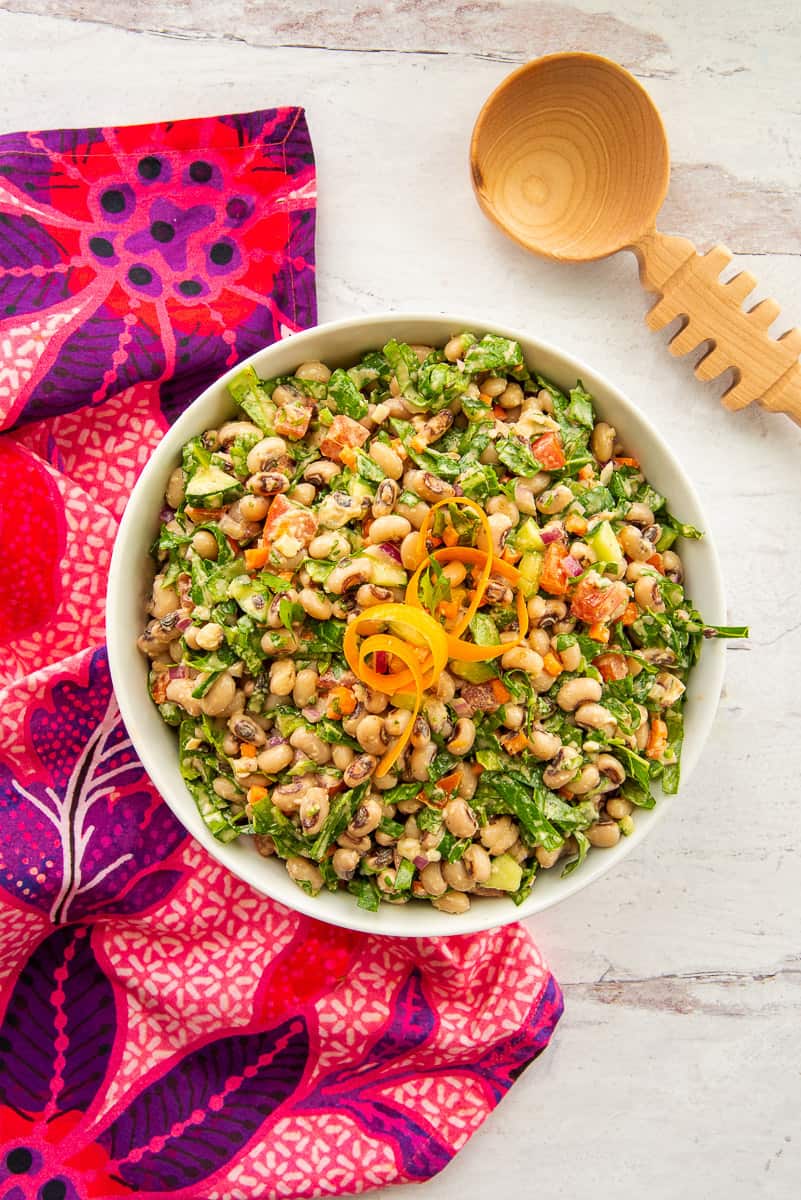
What Is A Black-Eyed Pea Salad?
Black-eyed pea salad is a nourishing, vibrant, delicious salad that combines tender black-eyed peas with robust ribbons of collard greens tossed in an easy-to-make ginger-garlic vinaigrette.
My family and friends love this salad’s bold flavors and satisfying texture, while I love its versatility. It’s ideal as a vegan, gluten-free main for lunch or a crowd-pleasing side for cookouts and holiday meals.
Isn’t This Just Texas Caviar?
Texas caviar is a popular Southern dish featuring black-eyed peas tossed in a zesty dip or salad dressing. Traditionally, it’s made with black-eyed peas, bell peppers, onions, and a tangy vinaigrette and sometimes served with tortilla chips like a bean-based salsa. While similar in spirit, my version elevates Texas caviar by adding leafy greens and bold seasoning, turning it into a complete, nutrient-dense salad.
Think of this version as the Cowboy Carter of black-eyed pea salads.
-Marta Rivera Diaz (you better quote me)
What Are Black-Eyed Peas?
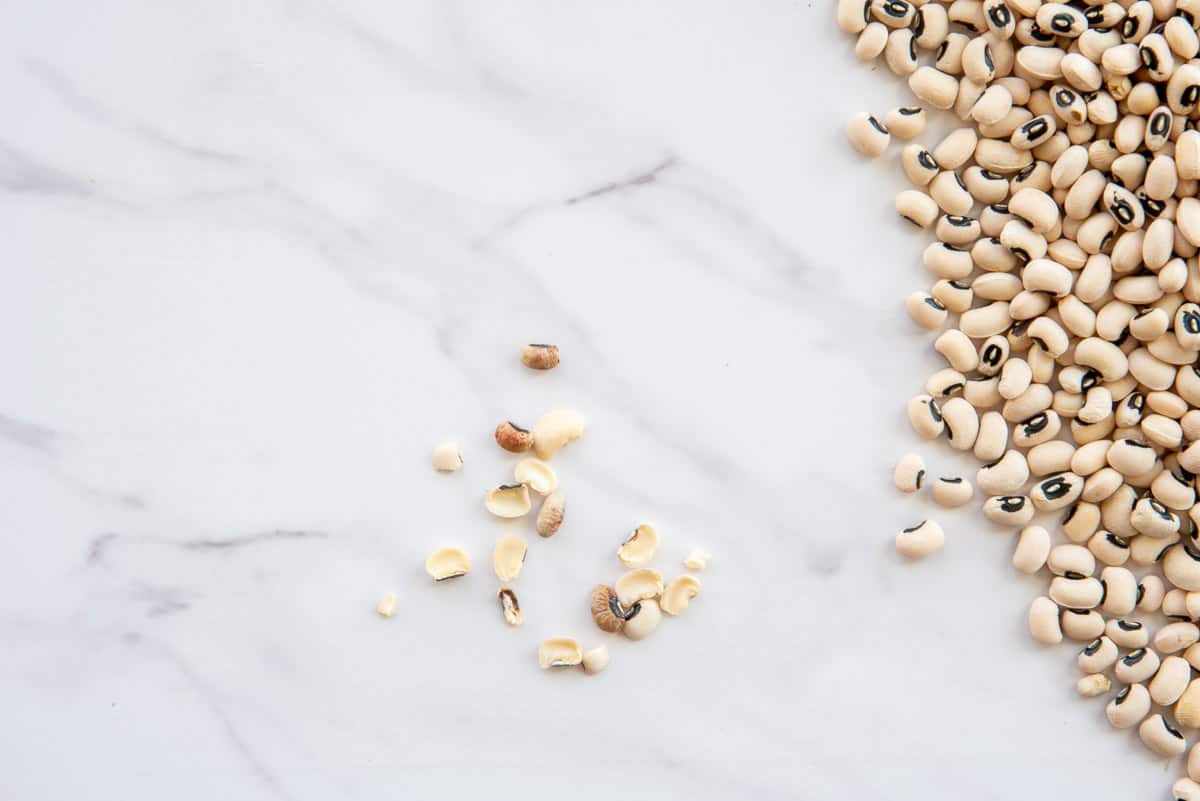
Black-eyed peas are small, creamy legumes with a distinctive black “eye” on one side. Funny enough, they, technically, aren’t peas. They’re part of the cowpea family and have been cultivated for thousands of years across Africa, Asia, and the Southern United States. Rich in fiber, plant protein, iron, and antioxidants, black-eyed peas add hearty texture and nutrition to salads, soups, stews, and side dishes.
Do I Need to Soak My Black-Eyed Peas Before I Cook Them?
Using any dried legume in your cooking requires some preparation, but their texture and flavor far surpass those of their canned counterparts. Never fear if you don’t have the time or inclination to start with dried peas. We’ll talk about how to make this recipe using canned black-eyed peas in a sec.
Soaking is optional but beneficial because soaking:
- Reduces cook time
- Improves digestibility
- Encourages even cooking
First, sort through your black-eyed peas to remove any that appear moldy, split, or wrinkled. My reject pile is on the left side of this image.
How Long Does It Take To Soak Black-Eyed Peas?
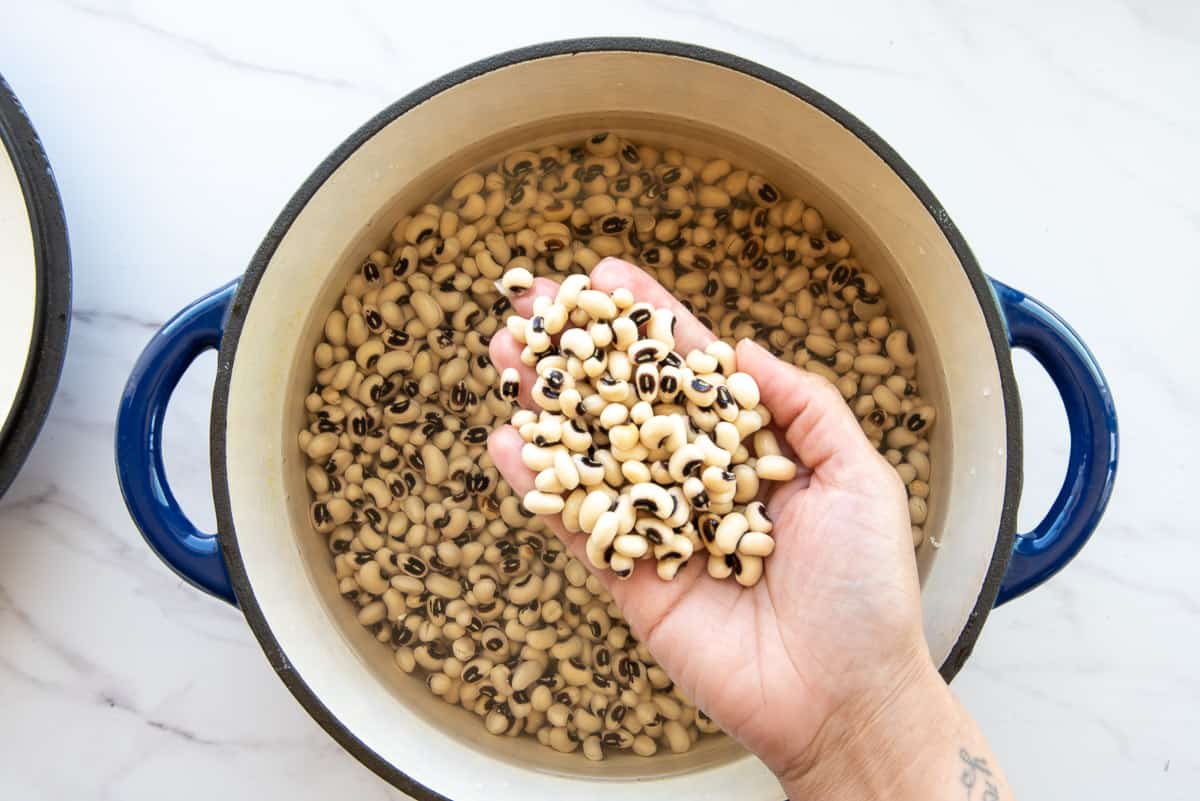
Once you sort out the rejects, add the black-eyed peas to a dutch oven and cover them with at least 4 inches of cold water. Soak the black-eyed peas for 3 hours. You can also cover the pot and put it in the fridge to let the black-eyed peas soak overnight.
Drain the water and rinse the peas to remove any residual field or factory dirt. Return the peas to the dutch oven and cover them with 4 inches of water. Bring this water up to a boil over medium-high heat.
Reduce the heat to medium-low once the water comes to a boil. Cover the pot and simmer the black-eyed peas for 45 minutes or until al dente.
Carefully pour the softened black-eyed peas into a colander to drain off the water. Rinse the peas under cold water and allow them to drain while you prepare the garlic-ginger vinaigrette.
You can quick-soak the peas by boiling them for 5 minutes and letting them sit, covered, for 1 hour if you’re short on time. If you fridge-soaked overnight, drain, rinse, then cook.
If you’re using canned peas, you can skip this step altogether and mosey on down to the next section.
Can I Use Canned Peas Instead?
You can replace the dried black-eyed peas in this salad with a large can of beans or three 15-ounce cans. Using canned peas offers great texture and convenience, perfect for quick meal prep or an easy side dish during a busy week. They also reduce the prep time for this recipe considerably.
Drain and rinse the can of peas in a colander to remove the canning liquid. Drain them well, or pat the black-eyed peas dry so the dressing coats them evenly.
You can also swap the dried black-eyed peas for frozen and thawed peas. Thaw the black-eyed peas in the refrigerator and strain off any liquid. Again, dry the peas to ensure the garlic-ginger vinaigrette sticks to them later.
How Do I Make The Dressing For Black-Eyed Pea Salad?
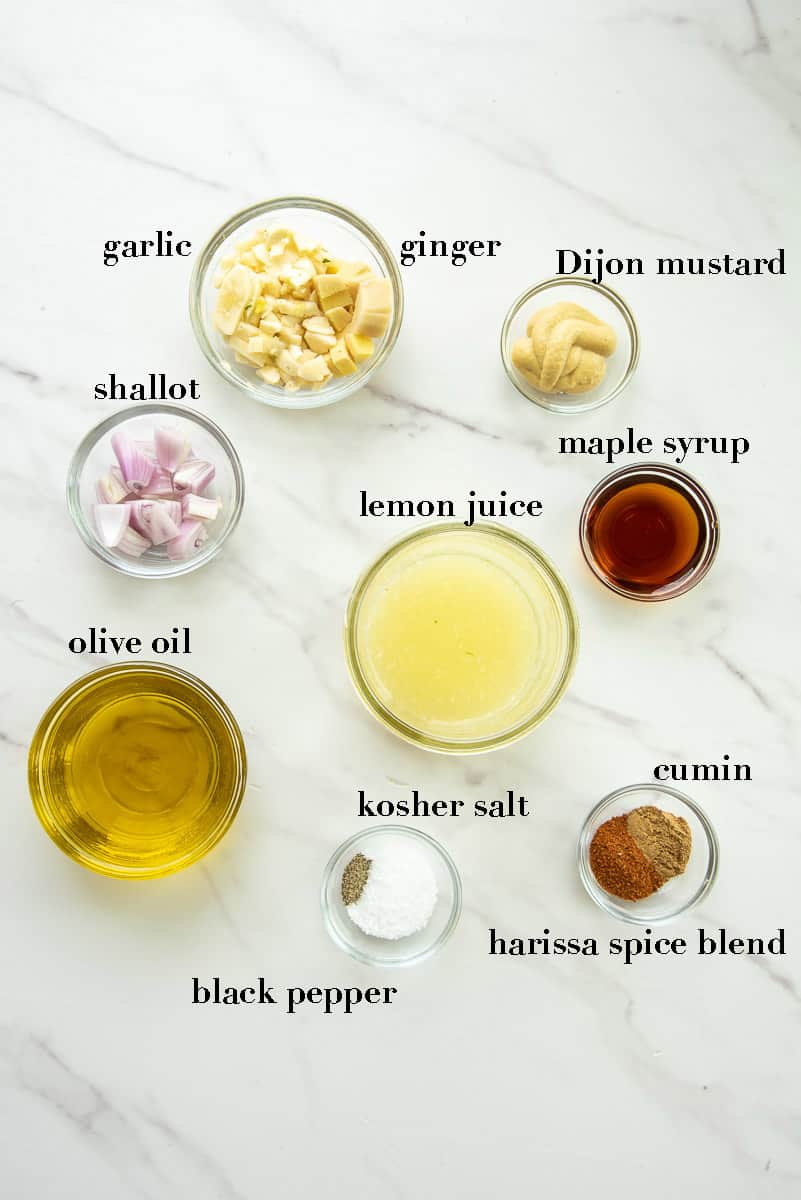
A garlic-ginger vinaigrette adds bright, zesty flavor to black-eyed pea salad. All you need is olive oil, lemon juice, shallot, garlic, ginger, maple syrup, Dijon mustard, cumin, harissa seasoning, kosher salt, and black pepper.
You can swap the lemon juice for fresh lime juice in this recipe. You can also replace the shallot with the same amount of yellow onion if you don’t have one.
Can I Substitute The Harissa Spice Blend?
Harissa spice blend is a seasoning of dried chilies, paprika, garlic powder, and warm spices like cumin, coriander, and caraway. You can replace it Mexican spice blend or Middle Eastern Spice Blend if you don’t keep it in the pantry.
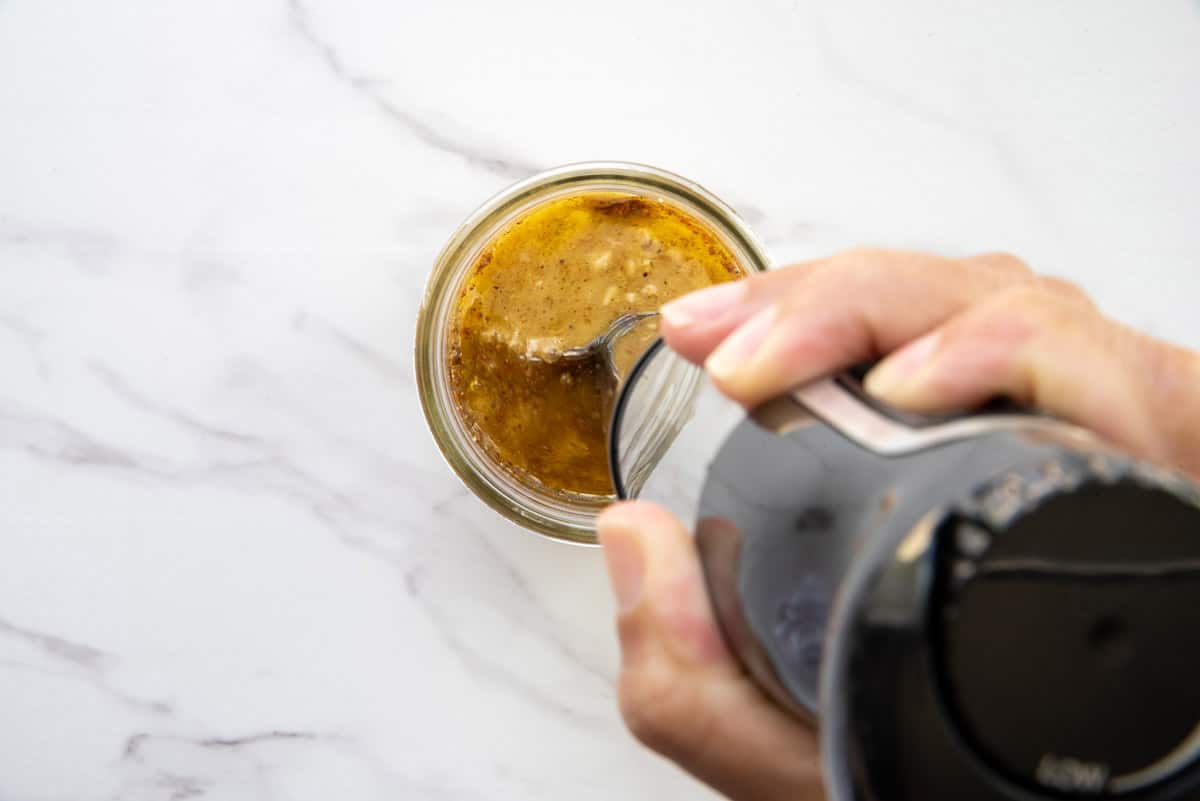
Add the oil, lemon juice, shallot, garlic, ginger, mustard, syrup, and spices to a small bowl, a quart-sized mason jar, or a blender. Use an immersion blender to blend the vinaigrette until it emulsifies and thickens. If you’re making the garlic-ginger vinaigrette in a blender, blend the ingredients at low speed. Add a small amount of cold water to the blender if things aren’t moving around enough.
How Far Ahead Can I Make The Garlic-Ginger Vinaigrette?

Once the vinaigrette forms an emulsion, it’s ready to use.
You can prepare the garlic-ginger vinaigrette 7 to 10 days ahead and store it in an airtight jar in the fridge. This allows the flavors to intensify, making your salad even more flavorful.
You may need to blend it for 30 seconds to re-emulsify, but it’s ready after that. This vinaigrette is also great on your regular salads or as a marinade for proteins.
What Other Ingredients Do I Need To Make Black-Eyed Pea Salad?
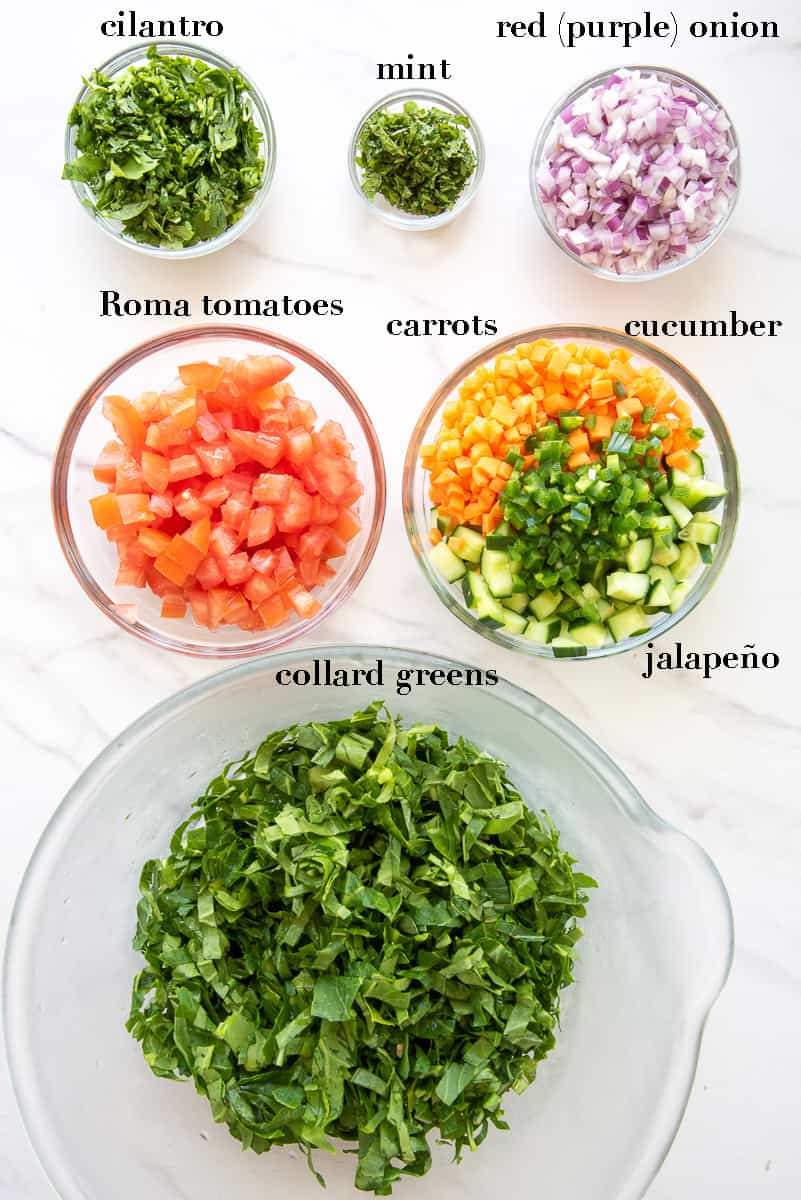
For the rest of the black-eyed pea salad, you need fresh collard greens, Roma tomatoes, English cucumber, carrots, jalapeño pepper, (purple) red onion, cilantro, and mint.
Grab a large mixing bowl and a set of salad spoons to mix the salad.
Can I Replace The Collard Greens In This Recipe?
Collard greens are popular in Brazil, Africa, and the American South. They are part of the broccoli family, known for their dark green, slightly bitter leaves, and for bringing wealth and prosperity. They’re packed with vitamins A, C, and K. Collards, even bagged greens, tend to be gritty, so wash them thoroughly; either soak them in cold water and let the dirt settle, or agitate the leaves to release any sand.
If you’re cutting the whole leaf, remove the thick center stem, slice the leaves in half, stack them, and cut crosswise into thin ribbons for the best texture. Bagged greens will reduce the recipe’s prep time. Just make sure you’re using shredded collards.
Swaps and Substitutions
- You can replace the collards in this recipe with kale, Swiss chard, or spinach.
- The jalapeño pepper is optional, but I love the mild heat it adds to the salad. Replace it with a red bell pepper for a milder pepper flavor and more color.
- Swap out the Roma tomatoes with a similar large tomato– heirlooms look beautiful in this salad!
- You can also replace the cilantro with fresh parsley, basil, or dill.
- For less onion flavor, replace the red onion with sliced green onions.
- And to bulk up the fiber, add drained canned or fresh corn.
How Far Ahead Can I Prepare It?
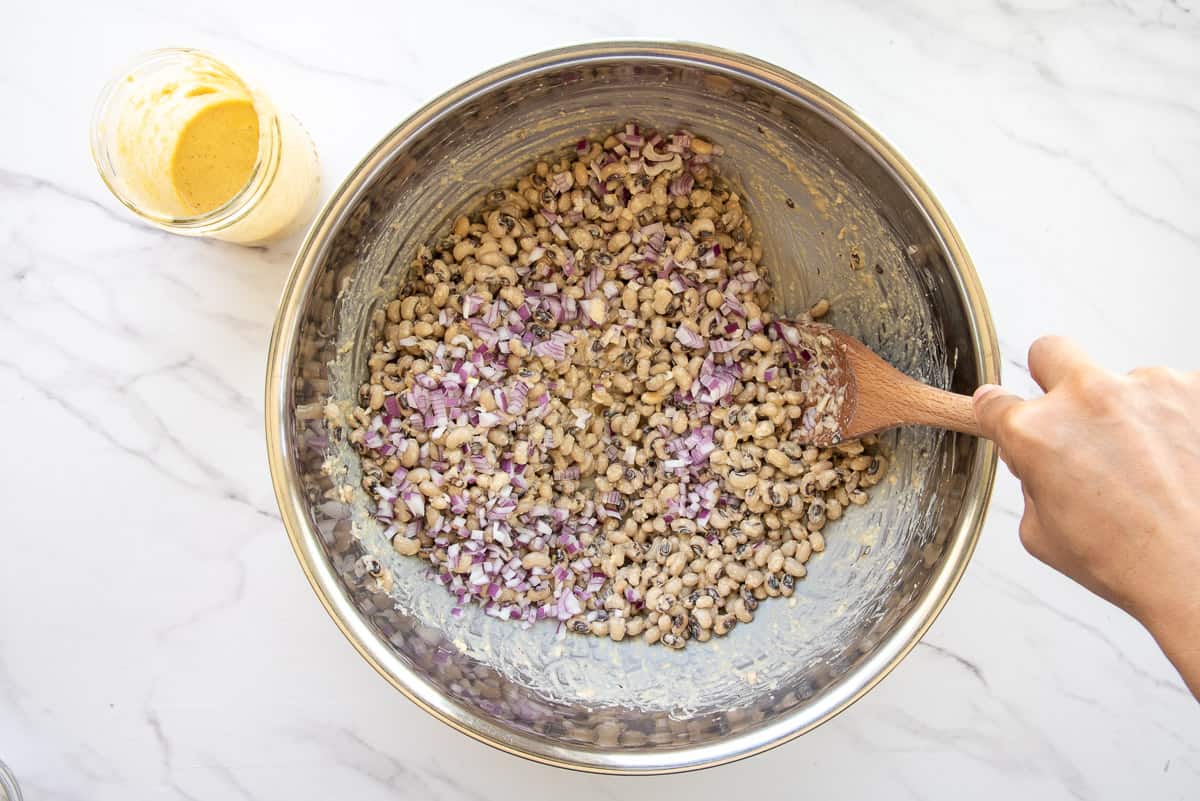
Add the tender black-eyed peas, while they’re still warm or at room temperature, to a large mixing bowl with the red onion. The peas absorb more of the dressing when they’re warm, but room temperature is fine. Pour the garlic-ginger vinaigrette into the bowl, then use salad spoons to toss the peas and onions in the dressing.
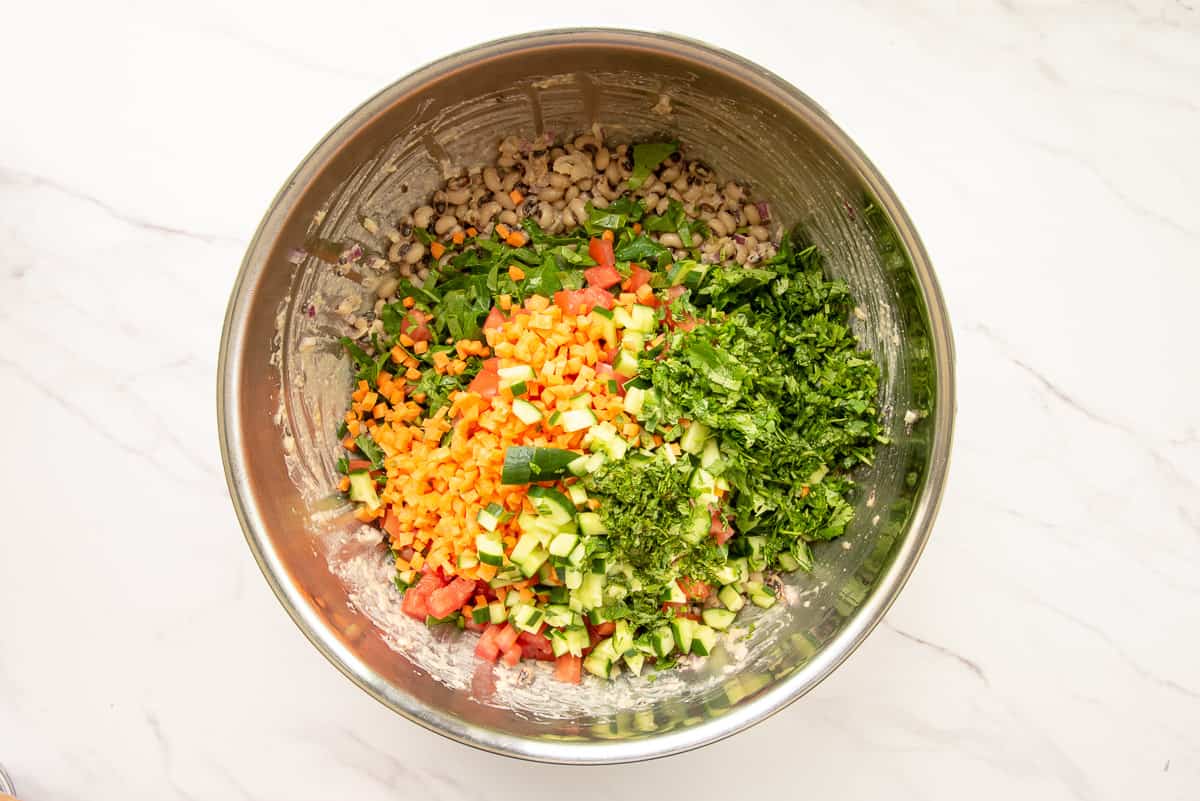
Add the collard greens, carrots, cucumber, tomatoes, jalapeño, cilantro, and mint to the bowl with the peas. Toss the ingredients together until combined.
You can cook and cool the peas and cut the collards 2 days ahead and store them in the fridge. Chop the veggies a day before, then prepare the black-eyed pea salad a day before serving and store it in a covered container in the refrigerator. Making the salad a day ahead gives the peas enough time to absorb the dressing and meld with the other ingredients’ flavors.
What Do I Serve Black-Eyed Pea Salad With?
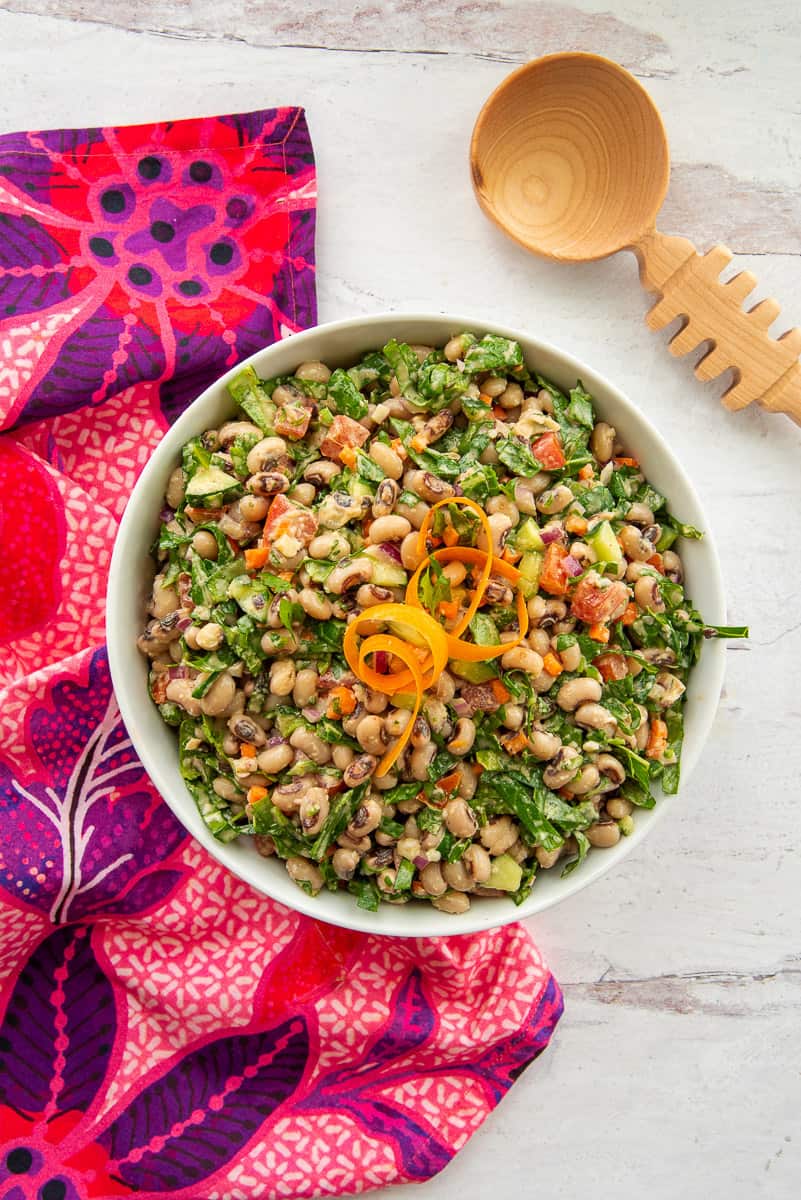
Once you toss everything together, the black-eyed pea salad is ready to enjoy. It does taste better the longer it sits, though, so I like refrigerating it for at least an hour before serving it.
Black-eyed pea salad is a great main course or lunch. This salad also pairs beautifully with:
- Grilled chicken, fish, or shrimp
- BBQ brisket or pork
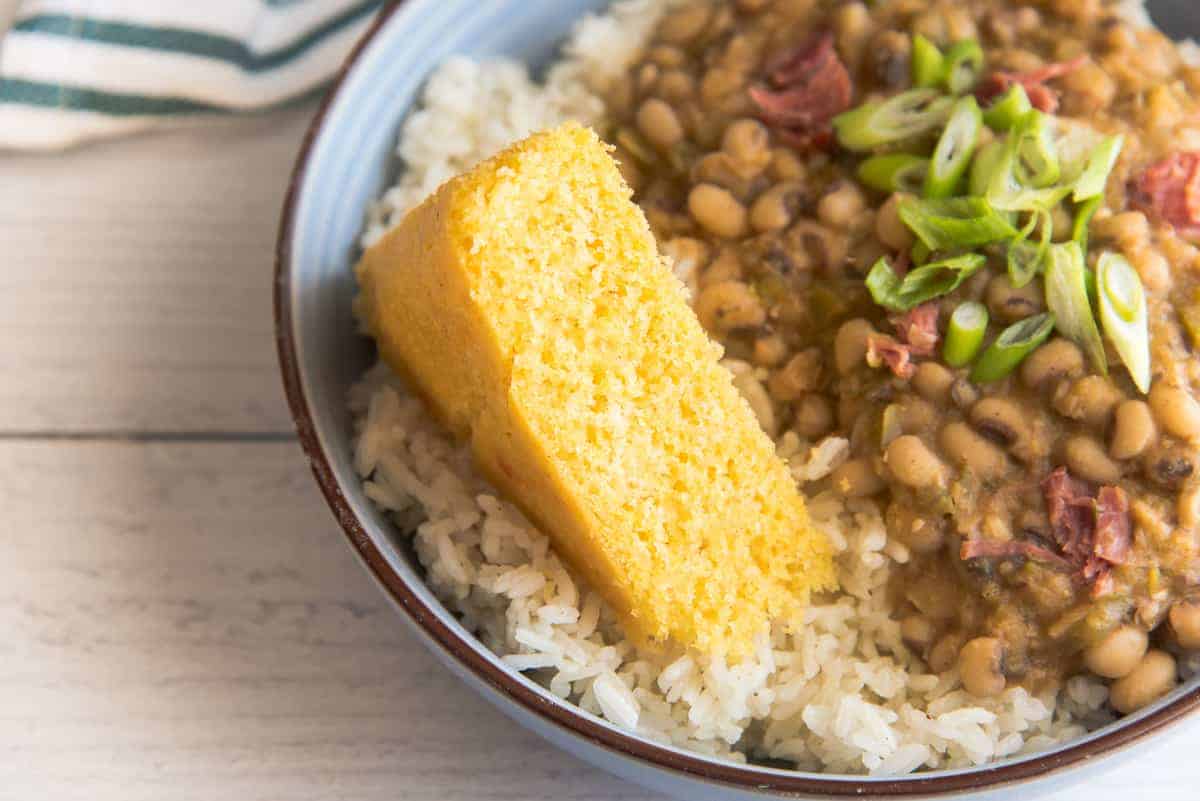
- Cornbread or Johnny Cakes
- Fresh fruit salad
- Avocado slices or feta crumbles
Its bright acidity and hearty protein work well alongside smoky, savory, or super-fresh dishes.
How Do I Store Leftovers?
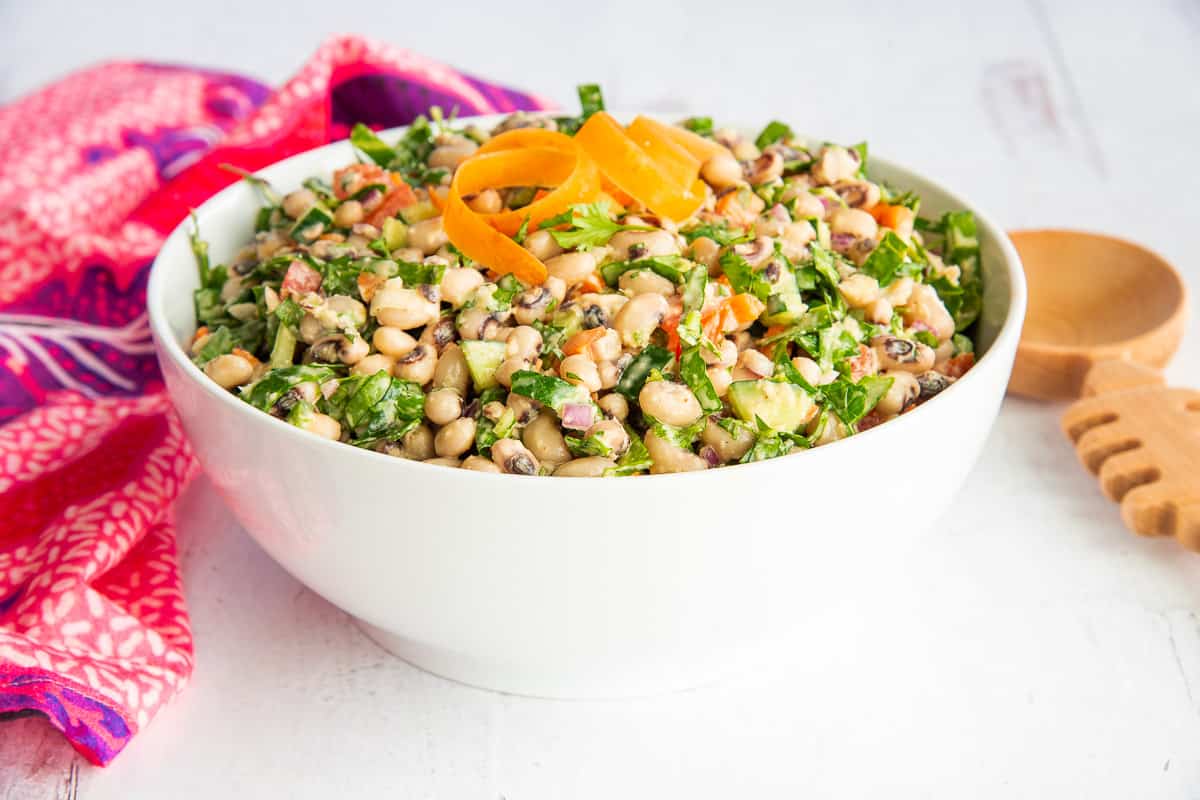
Transfer leftover black-eyed pea salad to an airtight container and store it in the refrigerator for 3 to 4 days.
As time passes, the tomatoes in the salad will soften to the point of mushiness, so enjoy it sooner rather than later.
Can I Freeze Black-Eyed Pea Salad After I Make It?

I don’t recommend freezing black-eyed pea salad after assembling it. The fresh vegetables and herbs wilt upon thawing, and the herbs turn black, which is so gross.
If you want to freeze components:
- Freeze cooked, cooled peas by themselves up to 3 months
- Thaw and combine with fresh greens and dressing when ready
This keeps the texture vibrant and enjoyable.
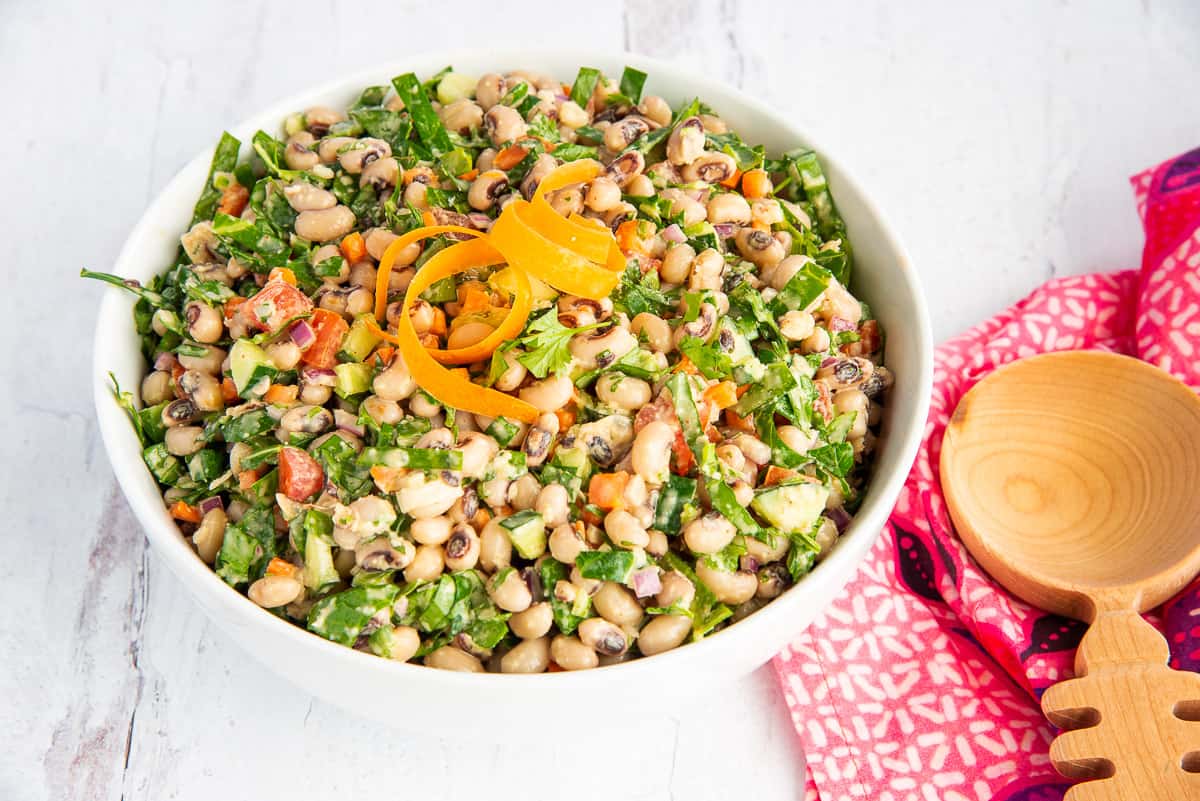
I wanted to name this “Black Folk’s Salad” because it represents our culture well: it has flavor, variety, and looks fine AF. No matter what it’s called, Black Eyed Pea Salad with Collard Greens proves that wholesome doesn’t have to mean boring, and tradition goes beyond New Year’s Day.
It’s hearty, craveable, and versatile enough to serve year-round. Whether you’re making it for New Year’s luck, a backyard gathering, or just a feel-good weekday lunch, this salad delivers flavor and nourishment in every forkful. Make it once, and don’t be surprised if it becomes part of your regular rotation. Grab those peas, chop those greens, and make something vibrant.

Black Eyed Pea Salad
at Sense & EdibilityEquipment
- immersion blender or blender
- dutch oven
- large mixing bowl
Ingredients
- 1 pound dried black eyed peas sorted (or 3 15–15.5 oz cans of black-eyed peas, drained and rinsed)
For the Garlic-Ginger Vinaigrette
- 1/2 cup olive oil
- 4 large lemons juiced (about 1/2 cup or 155ml)
- 1 small shallot rough chopped (about 20 grams)
- 3 large cloves garlic rough chopped
- 2 inch piece ginger peeled and chopped (about 15 grams)
- 1 1/2 tablespoons maple syrup or agave syrup
- 1 tablespoon Dijon mustard
- 1 teaspoon kosher salt plus more to taste
- 3/4 teaspoon harissa spice blend
- 1/2 teaspoon ground cumin
- 1/8 teaspoon black pepper
For the Salad
- 1 bunch collard greens destemmed and sliced into ribbons (about 3 1/2 cups or 125 grams)
- 2 medium carrots peeled and minced (about 1 cup or 110 grams)
- 2 small Roma tomatoes seeded and diced (1 cup or 110 grams)
- 1/2 English cucumber seeded and diced (1 cup or 110 grams)
- 1 small jalapeño seeded and minced (20 grams)
- 1/4 bunch cilantro trimmed and chopped (30 grams)
- 1 stem mint destemmed and chopped (1 tablespoon or 15 grams)
Instructions
Soften the Black Eyed Peas
- Add the black-eyed peas to a large Dutch oven and cover them with at least 4 inches of cold water. Soak the black-eyed peas for 3 hours. You can also cover the pot and put it in the fridge to let the black-eyed peas soak overnight. *The longer you soak the peas, the less time they'll cook*
- Drain the water and rinse the peas to remove any residual field or factory dirt. Return the peas to the dutch oven and cover them with 4 inches of water. Bring this water up to a boil over medium-high heat.
- Reduce the heat to medium-low once the water comes to a boil. Cover the pot and simmer the peas for 45 minutes or until al dente.
- Carefully pour the black-eyed peas into a colander to drain the water. Rinse the peas under cold water and allow them to drain while you prepare the garlic-ginger vinaigrette.
Make the Garlic-Ginger Vinaigrette
- Add the oil, lemon juice, shallot, garlic, ginger, maple syrup, Dijon mustard, kosher salt, harissa spice blend, ground cumin, and black pepper to a quart-sized mason jar or blender.
- Use an immersion blender to blend the vinaigrette until it emulsifies or becomes thick and cohesive. *If you're making the garlic-ginger vinaigrette in a blender, blend the ingredients together at low speed. Add a small amount of cold water to the blender if things aren't moving around enough.*Once the vinaigrette forms an emulsion, it's ready to use.
Assemble the Black Eyed Pea Salad
- Add the drained black-eyed peas to a large mixing bowl with the red onion while the peas are still warm or at least room temperature. Add the collard greens, carrots, tomatoes, cucumber, jalapeño, cilantro, and mint to the bowl of peas.
- Pour the garlic-ginger vinaigrette into the bowl, then use salad spoons to toss the ingredients until combined.
- Once you toss everything together, the black-eyed pea salad is ready to serve Black-eyed pea salad is a great side dish to serve with grilled meat, chicken wings, or seafood dishes. Serve it with grilled tofu or on its own for a delicious vegan meal.
Notes
Swaps and Substitutions:
- You can replace the dry black-eyed peas with canned. Drain and rinse the can of peas in a colander to remove the canning liquid.
- Swap the dried black-eyed peas for frozen and thawed peas. Thaw the black-eyed peas in the refrigerator and strain off any liquid.
- You can swap the lemon juice for fresh lime juice in this recipe.
- Replace the shallot with the same amount of yellow onion if you don’t have one.
- Mexican spice blend or Middle Eastern Spice Blend can replace the harissa spice blend in this recipe.
- You can replace the collard greens in this recipe with kale, Swiss chard, or spinach.
- The jalapeño pepper is optional in this salad. Replace it with a red bell pepper for a milder pepper flavor and more color.
- Swap out the Roma tomatoes with a similar large tomato– heirlooms look beautiful in this salad!
- You can also replace the cilantro with fresh flat-leaf parsley, basil, or dill.
- For less onion flavor, replace the red onion with sliced green onions.
- And to bulk up the fiber, add drained canned or fresh corn.
Tips and Techniques:
- Black-eyed peas don’t require soaking as other dried beans, as some legumes do, though soaking does help to soften them and slightly reduces the cooking time required to make them tender.
- Increase the cooking time to 1 hour and 30 minutes if you didn’t soak the peas beforehand.
- You can prepare the garlic-ginger vinaigrette 7 to 10 days ahead and store it in a covered container in the refrigerator.
- Blend any dressing that’s sat for more than 1 hour for 30 seconds to emulsify it again.
- Dressing the black-eyed peas while they are still warm allows them to absorb more of the dressing.
- You can put the bowl of peas in the refrigerator uncovered and start prepping the rest of the salad ingredients while you wait for them to cool down.
- You can prepare black-eyed pea salad a day before serving it and store it in a covered container in the refrigerator.
- Making the salad a day ahead gives the peas enough time to absorb the dressing and meld with the rest of the ingredients’ flavors.
- You can soak the collard greens in a bowlful of cold water and let the grit settle to the bottom of the bowl on its own, or agitate the leaves to encourage the dirt to come off them.
Storage Instructions:
- Transfer leftover black-eyed pea salad to an airtight container and store it in the refrigerator for 3 to 4 days.
- I don’t recommend freezing black-eyed pea salad after assembling it because the vegetables and herbs wilt upon thawing, and the herbs turn black.
- Instead, freeze cooked, cooled peas by themselves up to 3 months. Thaw and combine with fresh greens and dressing when ready.





I’m not a big salad guy, but this is really good! I love how refreshing it is.
I love this recipe, it’s so good and such a fun alternative to a normal salad with dinner!
I totally agree with you! I also love that I can eat this black eyed pea salad the next day for lunch. I don’t even need a protein to go with it.
This salad has become one of my favorite black eyed pea recipes. I love the layers of flavor and all the different colors and textures–makes it easy to get all my fiber and protein in.
That’s right, Jazz. Health & flavor in every bite!
The lemon juice, shallots, cumin and ginger created a flavor sensation I just can’t get enough of! This was the only salad I didnt have leftovers of last weekend. A winner!
I’m so glad you enjoyed it, Robin!