
If you love cheesecake and grew up enjoying cascos de guayaba (guava shells in syrup) with queso de país on Ritz crackers, this dessert is about to become your new obsession. Cascos de Guayaba Cheesecake brings together the tangy creaminess of a NY-Style cheesecake with the tart, floral sweetness of slow-simmered guava halves, creating a dessert that’s unique, yet nostalgic.
It’s the perfect centerpiece for holidays, celebrations, or any time you want to serve something undeniably special.
What Is Guayaba?
Guayaba (pronounced gwah-YAH-bah) is the Spanish word for “guavas,” which are round or pear-shaped tropical fruits that grow on evergreen trees in the myrtle family (Psidium guajava). They have green, yellow, or sometimes reddish skin with white, pink, or deep coral flesh and small, edible seeds.
Pinkish-red guavas are most common in Caribbean and Latin cooking.
Guavas have a sweet, floral, and slightly tangy flavor. To me, guavas smell like a mix of strawberry, pear, lemon, and the tropics.
Besides being eaten fresh, guava is also enjoyed as a juice, puree, paste, marmalade or jelly, or in candied shells, as in this recipe.
Where Do Guavas Come From?
Guavas are native to the Americas, specifically the Caribbean, Mexico, Central, and South America.
Indigenous peoples were growing guava in these regions for thousands of years before colonization. The fruit was eventually transported to parts of Africa, India, Southeast Asia, and the Pacific through Spanish and Portuguese trade routes.
Today, major guava-growing regions include:
- Puerto Rico and the Caribbean
- Mexico
- Brazil
- Colombia
- India (which is now one of the largest producers in the world)
What Are Cascos de Guayaba?
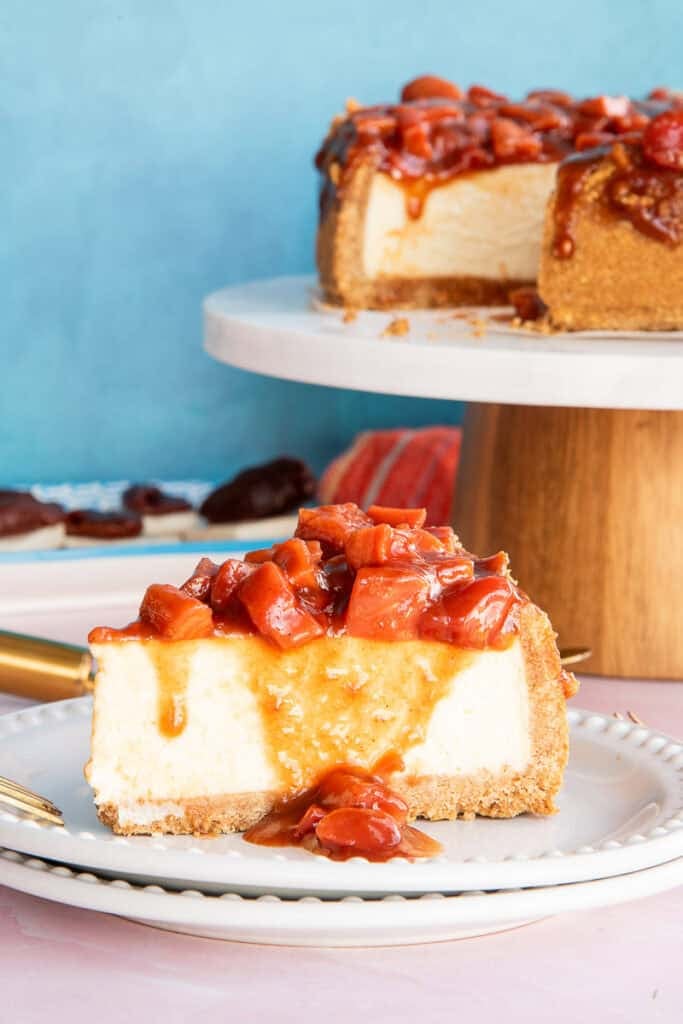
In Puerto Rican kitchens, cascos de guayaba (pronounced KAHS-kohs deh gwah-YAH-bah) are the deseeded flesh of guava fruit slowly simmered in sugar syrup until they’re tender, glossy, and deeply fragrant. We serve them with queso de país (pronounced KAY-soh deh pah-EES) or queso blanco. The literal translation is country cheese, but we know it as farmer’s cheese here in the States. Some people serve them with cream cheese if they can’t find queso de país. Usually, we put the cascos and cheese on a Ritz crackers as hors d’oeuvres. You can also eat them straight from the can.
I came up with this dessert on my monthly trip to the tiendita, where I buy the ingredients for my Puerto Rican and Caribbean recipes.
When I reached for a can of cascos de guayaba, I asked my daughter, “What do you think of a cheesecake with these components?”
Her reaction was approval enough.
How Do I Make The Cheesecake Crust?
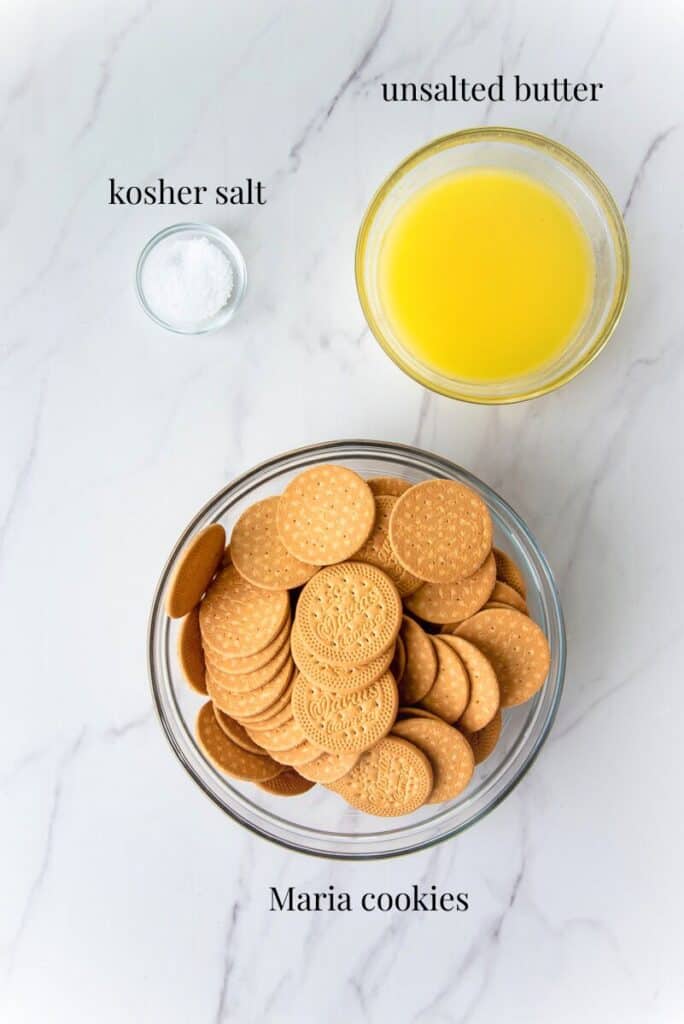
Ritz crackers are usually what we serve cascos de guayaba con queso de país on. They don’t work when making cheesecake crusts, though. They have too much butter in them, so when you add more butter to bind the crust together, the mixture leaks and loses its shape.
Instead, mimic the cracker’s flavor with Maria cookies, unsalted butter, and kosher salt.
Maria cookies are the Nilla wafers of the Latin kitchen. We eat them dunked in coffee, use them in desserts, and they’re the afternoon treat for many school children. You can find them in most Hispanic markets or online. The kosher salt gives the crust that “butter cracker” vibe, while the butter binds everything together.
If you can find Maria cookies, use the crust from this recipe and the kosher salt from this one, instead.


Crush the cookies in your food processor to fine crumbs using the metal blade attachment. You can also put the cookies in a food storage bag and roll over them with a rolling pin a few times to crush them.
Toss the salt into the cookie crumbs to combine. Next, add the melted butter and mix until the mixture stays clumped when you squeeze it in your hand.
Pour the crust mixture into a 10-inch springform pan and use a straight-sided glass or cup to press it into the pan and up the sides. You want the crust to come almost to the top of the pan so you have room for the guava topping later.
How Long Do I Bake Cheesecake Crust?
Put the pan in a 350°F (175°C) oven and bake it for 10 minutes. You’ll start smelling the crust as the baking time comes to an end. Remove the pan from the oven.
Let the crust cool at least 10–15 minutes after you remove it from the oven, then wrap the bottom and sides in two layers of heavy-duty aluminum foil.
How Do I Make The Cheesecake?

Queso de país is a semi-firm, slightly tangy white cheese commonly eaten with sweet fruits or preserves in the Hispanic culture. We love us a good queso de país with crackers, my friend. But this cheese is not always easy to find in the States. I’m parroting its tanginess by adding goat cheese– which is easier to find– to cream cheese, eggs, granulated sugar, vanilla extract, and kosher salt.
The cheesecake has the same tangy flavor as queso de país but with more accessible ingredients. Make sure the cream cheese, goat cheese, and eggs are at room temperature before mixing the cheesecake. This will help prevent a lumpy batter.
How Long Do I Bake The Cheesecake?
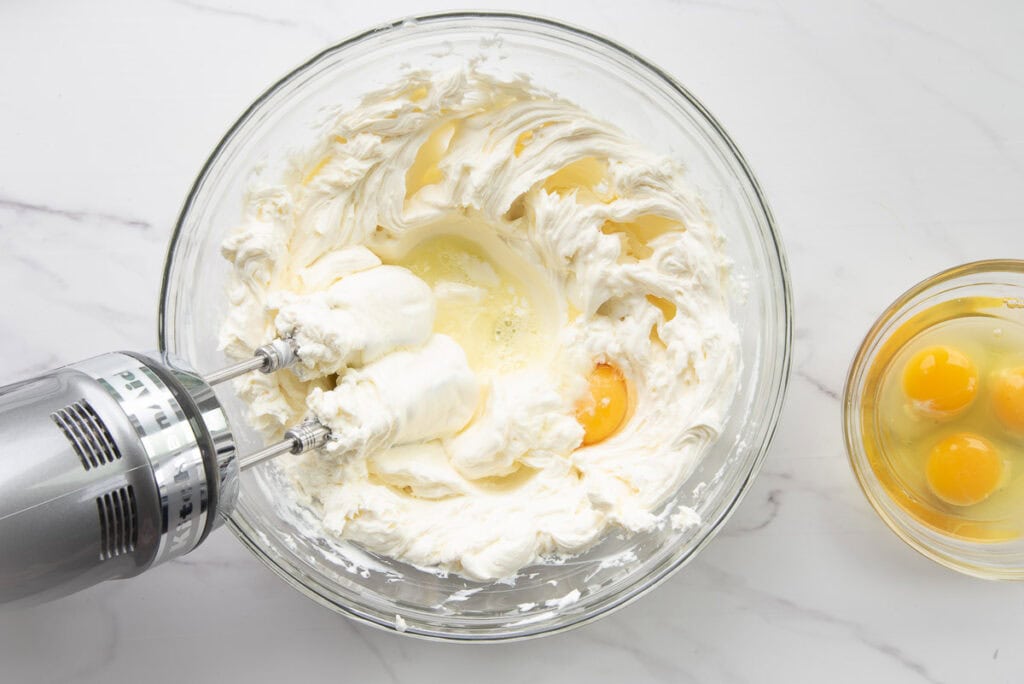
Add the cream and goat cheeses to a large mixing bowl with the sugar and kosher salt. Blend them until smooth on 2nd speed (med-low) for 2-3 minutes. Scrape down the bowl and beaters twice during this mixing time.
Blend the eggs, one at a time, into the cheese mixture once it’s smooth. Stop the mixer and scrape down the bowl and beaters once each egg is incorporated, then continue mixing at 2nd speed. Add the vanilla extract with the last egg. After scraping down the bowl and beaters, blend the batter for an additional 30 seconds to a minute to ensure the batter is fully mixed. This process will take about 3 1/2 to 4 minutes.
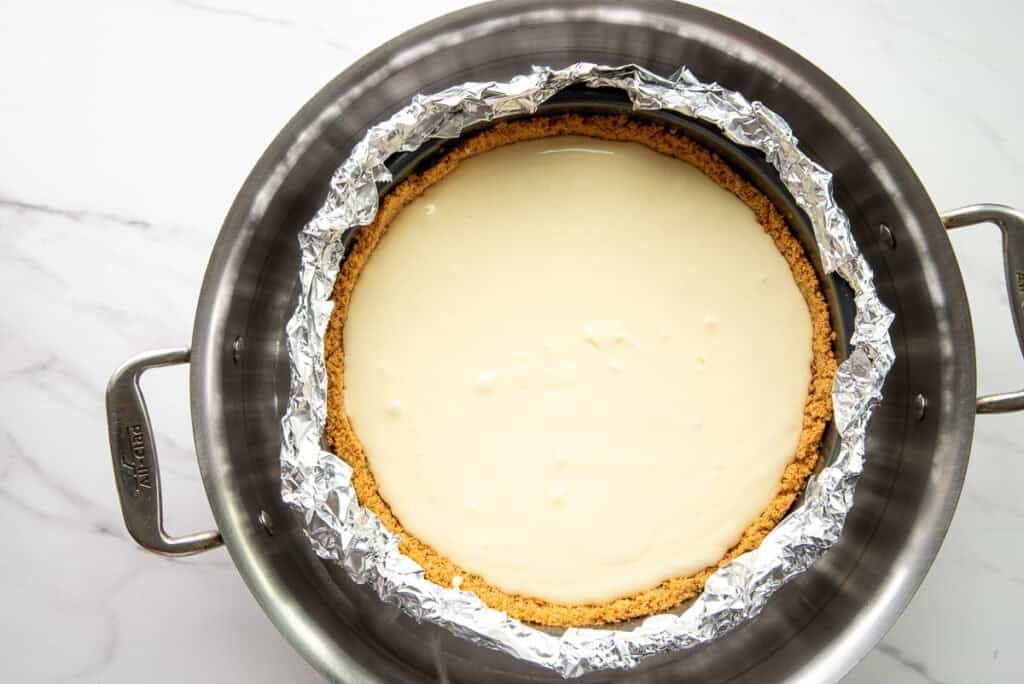
Scrape the cheesecake batter into the crust in the springform pan. Put the springform pan into a larger pan that’s at least 3 inches larger. Pour boiling water into the larger pan until it reaches halfway up the side of the cheesecake pan. This bain-marie (or water bath) will keep the temperature constant and prevent cracking.
Carefully place the pan setup in the 350°F (175°C) oven and bake for 1 hour.
How Do I Prevent Cracks In My Cheesecakes?
Turn off the oven and prop the door open with a wooden spoon once the baking time is finished. Allow the cheesecake to gradually cool in the oven to prevent a crack from forming on the surface.
After an hour, remove the pan setup from the oven. Remove the foil liner from the springform pan and let the cheesecake cool while you prepare the topping.
What Do I Need For The Cascos de Guayaba Topping?
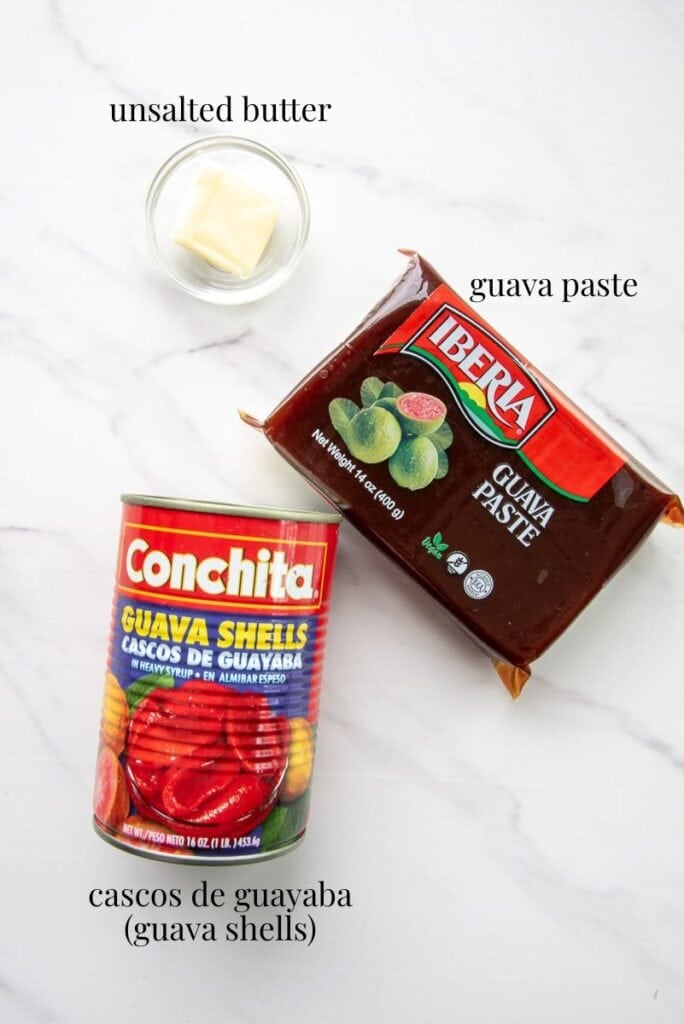
The topping for this cascos de guayaba cheesecake is stoopid simple to make, but will require a trip to the Hispanic market. To make the topping, you need cascos de guayaba, guava paste, and unsalted butter.
You’re only going to use the syrup from one can of cascos de guayaba, but don’t throw away the other can of syrup! You can save that in an airtight container in the fridge for up to a month and use it as a simple syrup substitute.
Use the leftover guava syrup to sweeten cocktails, tea, or warm breakfast cereals.
How Do I Make The Cascos de Guayaba Topping?
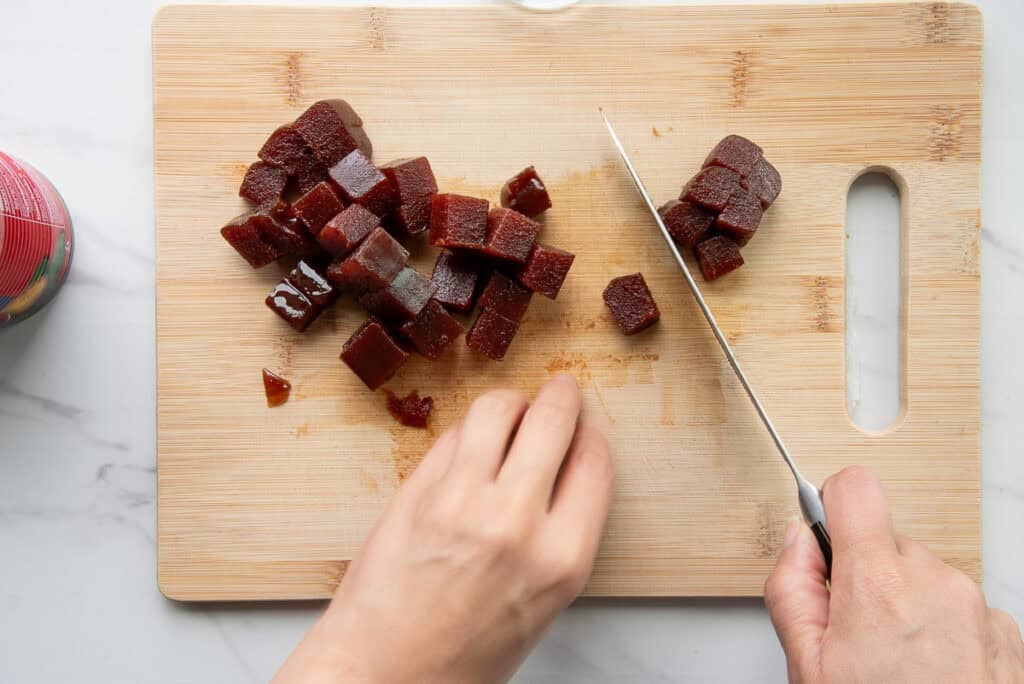


Dice the guava paste into small chunks, then combine it with the syrup drained from one can of cascos. Microwave the mixture on high for 2-3 minutes, in 1-minute increments. Whisk the mixture after each minute to help the guava paste melt evenly.
Let the mixture cool after it’s smooth and runny. Cut the guava shells into 1/4- 1/2-inch chunks while the mixture cools. By the time you’re done cutting both cans of guava shells, the mixture should be cool enough to add them. First, whisk in the butter. This gives the final topping a smooth, shiny finish.
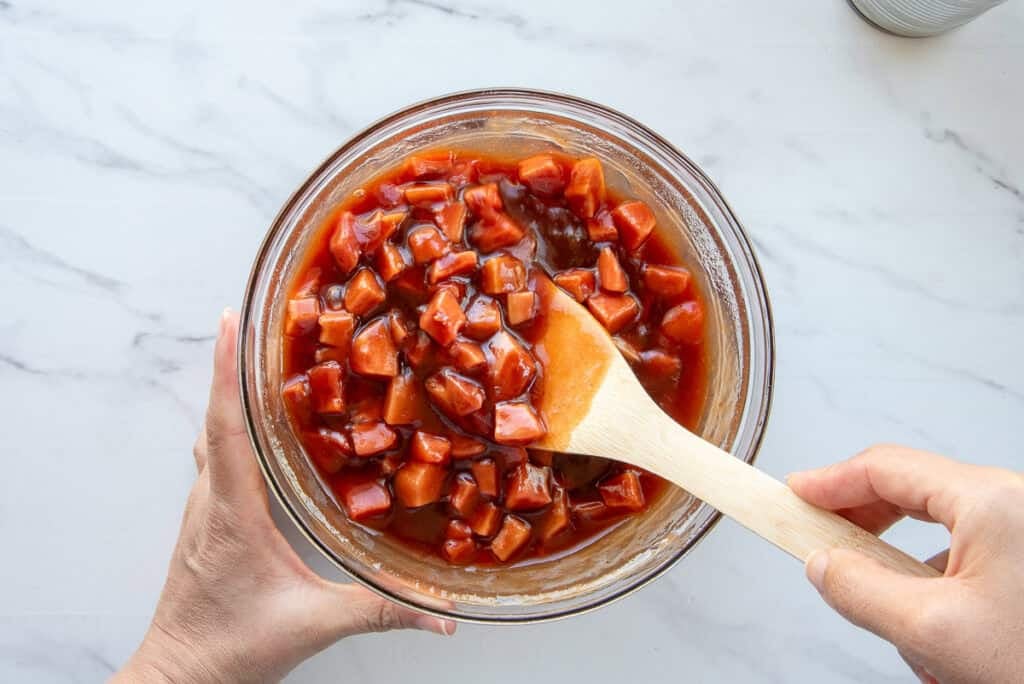
Fold the guava chunks into the glaze with a wooden spoon until they are fully coated. Allow the cascos de guayaba topping to cool completely at room temperature.
How Far Ahead Can I Assemble The Cascos de Guayaba Cheesecake?

Scrape the topping onto the cheesecake and return it to the fridge to chill overnight. It’s important for the topping and cheesecake to cool completely because this allows the guava paste in the topping to firm up again.
You can assemble the cheesecake a day before serving. I recommend this because it gives the best results.
How to Serve It, Puerto Rican Style
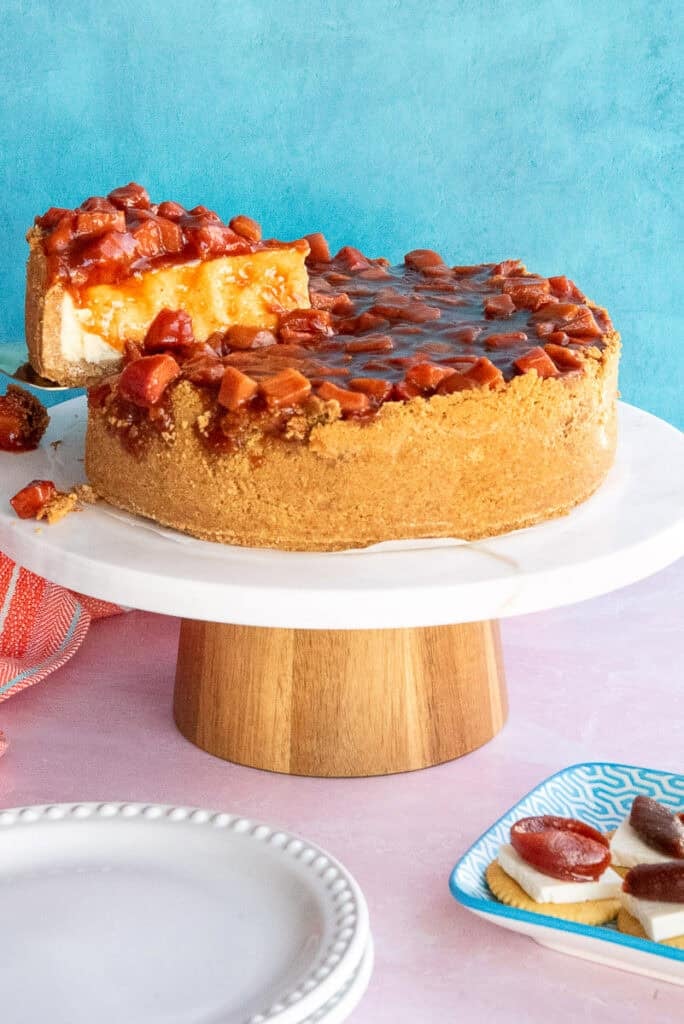
Run a thin knife around the side of the pan to separate it from the cheesecake. Unclip the collar and twist it a few times to ensure it’s completely separated, then lift up and away from the cheesecake.
To serve this cascos de guayaba cheesecake Puerto Rican-style, pour a strong cup of café con leche and serve it with a slice of cheesecake. Milk also goes well with this dessert. You can get extra-fancy and top it with toasted coconut flakes or whipped cream, but it’s best on its own.
How Do I Store Cascos de Guayaba Cheesecake?

You can store leftover cheesecake in the fridge for up to 3 days.
Pro Tips:
- Press a piece of parchment or wax paper against the exposed (insides) of the cheesecake to keep it from hardening.
- If the guava syrup starts to “weep” a little, that’s normal — just blot gently with a paper towel before serving or leave it as is.
- Avoid leaving the cheesecake out at room temperature for extended periods to preserve its shelf life.
Can I Freeze Cheesecake?
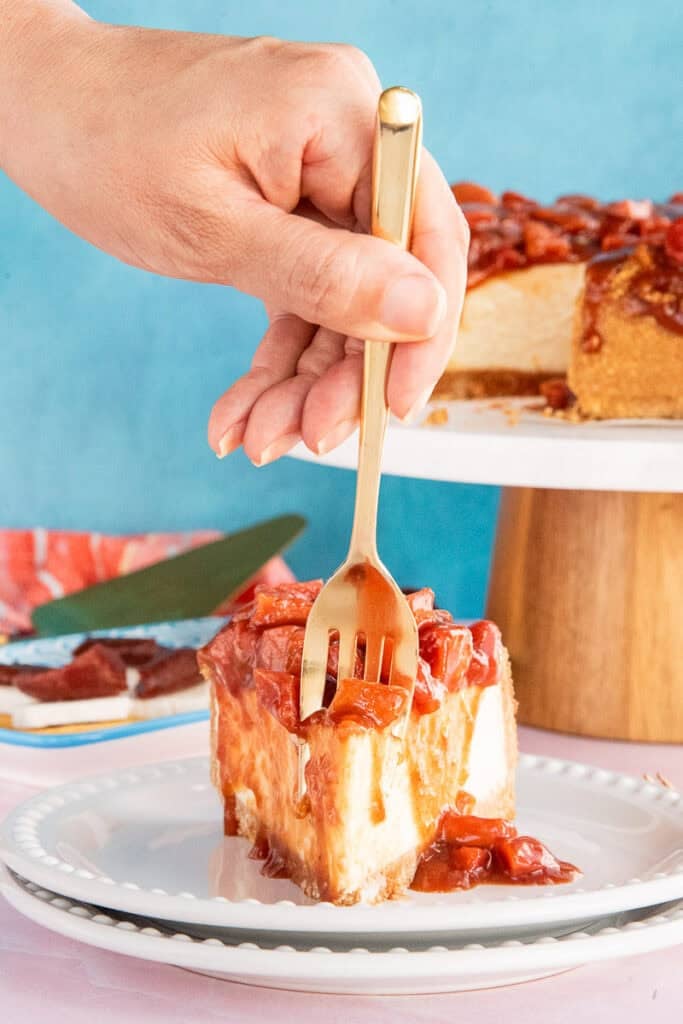
You can freeze this cheesecake for up to 2–3 months, but do so without the topping. Freezing it with the topping results in a runny mess when thawed.
Freeze the whole cheesecake:
- Wrap tightly in plastic wrap.
- Wrap again in aluminum foil or place in a freezer-safe container, then freeze.
Freeze individual slices:
- Slice the cheesecake.
- Place slices on a tray and freeze uncovered for 1–2 hours to prevent sticking.
- Wrap each slice tightly in plastic wrap, then foil, and store in a freezer bag or container, then freeze.
Thawing frozen cheesecake:
- Best method: Move to the refrigerator and thaw 6–8 hours or overnight.
- Quick method: Let a slice sit at room temperature for 30–45 minutes.
Add the cascos de guayaba topping after thawing the cheesecake for the results.
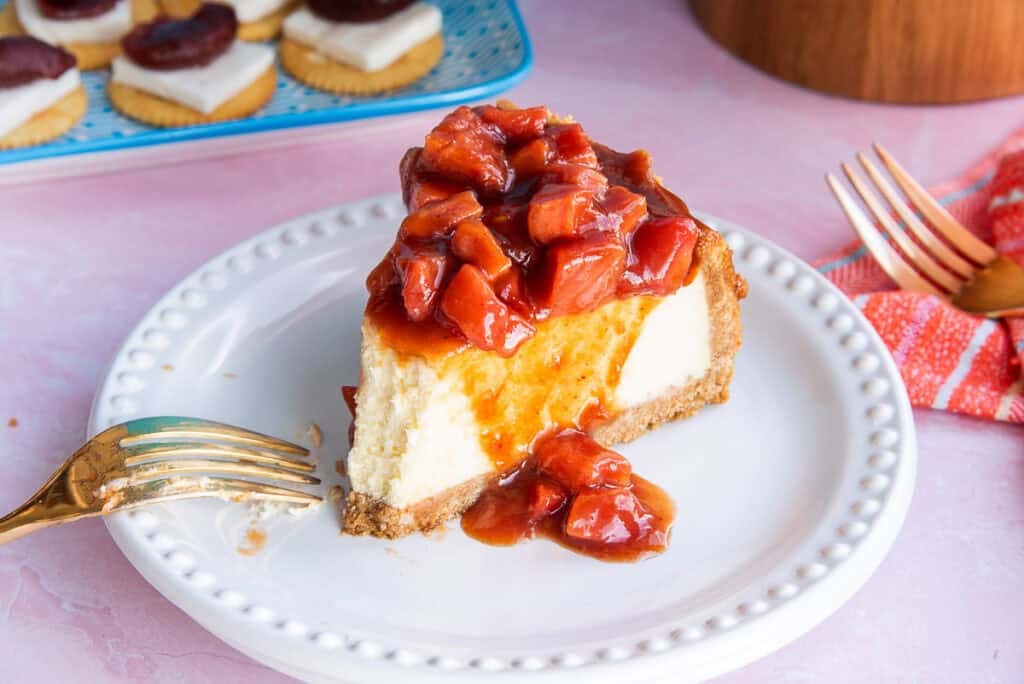
This Cascos de Guayaba Cheesecake is more than just a dessert; for me, it’s a slice of Puerto Rican tradition layered with New York–style indulgence, nostalgia, and pure joy. Whether you’re making it for a holiday table, a birthday, or simply because you’re craving something special, this cheesecake brings people together the way only dessert can. Give it a try, make it your own, and don’t forget to share your creation — tag your photos, leave a comment, and let me know how your cheesecake turned out!
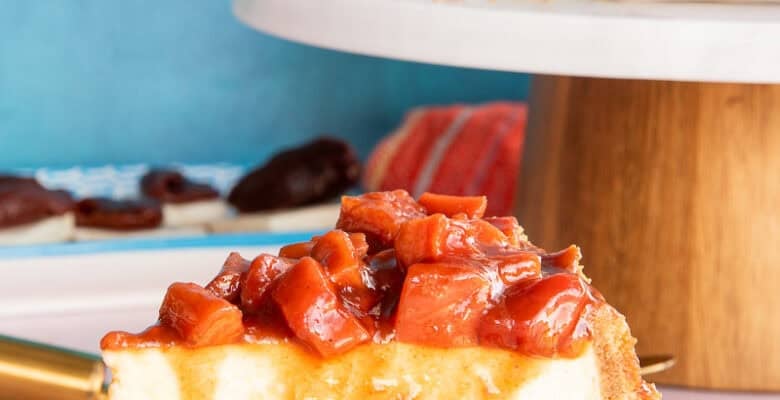
Cascos de Guayaba Cheesecake
at Sense & EdibilityEquipment
- food processor or rolling pin
- 10-inch springform pan (cheesecake pan)
Ingredients
For the Salted Maria Cookie Crust
- 76 Maria cookies (buy 2 4.9-ounce packs)
- 12 tablespoons unsalted butter (1 1/2 sticks), melted
- 1 1/2 teaspoons kosher salt or less if desired
For the Cheesecake
- 3 8-ounce packages cream cheese at room temperature
- 8 ounces goat cheese at room temperature
- 3/4 cup granulated sugar
- 1/2 teaspoon kosher salt optional
- 4 large eggs at room temperature
- 2 teaspoons vanilla extract
For the Cascos de Guayaba Topping
- 2 17-ounce cans cascos de guayaba diced, reserve the syrup from one can only (see note)
- 8 ounces guava paste diced
- 1 tablespoon unsalted butter
Instructions
- Heat your oven to 350°F (175°C).Put 4-6 cups of water in a pot and heat it over medium heat for the water bath.
Prepare the Maria Cookie Crust
- Crush the cookies in your food processor to fine crumbs using the metal blade attachment. Toss the salt into the cookie crumbs to combine.
- Next, add the melted butter and mix until the mixture stays clumped when you squeeze it in your hand.Pour the crust mixture into a 10-inch springform pan and use a straight-sided glass or cup to press it into the pan and up the sides.
- Put the pan in the hot oven and bake it for 10 minutes. Don't turn off the oven.Remove the pan from the oven, let the crust cool at least 10–15 minutes, then wrap the bottom and sides in two layers of heavy-duty aluminum foil.
Prepare the Cheesecake Batter
- Blend the cream and goat cheeses with the sugar and kosher salt in a large mixing bowl at 2nd speed (med-low) for 2-3 minutes, or until smooth. Scrape down the bowl and beaters twice during this mixing time.
- Blend the eggs, one at a time, stopping the mixer and scraping down the bowl and beaters once each egg is incorporated, then continue mixing at 2nd speed. Add the vanilla extract with the last egg. After scraping down the bowl and beaters, blend the batter for an additional 30 seconds to a minute to ensure the batter is fully mixed.
- Scrape the cheesecake batter into the crust in the springform pan. Put the springform pan into a larger pan that's at least 3 inches larger. Pour the boiling water into the larger pan until it reaches halfway up the side of the cheesecake pan.
Bake, Then Slowly Cool the Cheesecake
- Carefully place the pan setup in the hot oven and bake for 1 hour.Turn off the oven and prop the door open with a wooden spoon once the baking time is finished. Allow the cheesecake to gradually cool in the oven to prevent a crack from forming on the surface.
- After an hour, remove the pan setup from the oven. Remove the foil liner from the springform pan and let the cheesecake cool while you prepare the topping.
Make the Cascos de Guayaba Topping
- You're only going to use the syrup from one can of cascos de guayaba. Dice the guava paste into small chunks, then combine it with the syrup drained from one can of cascos. Microwave the mixture on high for 2-3 minutes, in 1-minute increments. Whisk the mixture after each minute to help the guava paste melt evenly.
- Let the mixture cool after it's smooth and runny.
- Cut the guava shells into 1/4- 1/2-inch chunks while the mixture cools. By the time you're done cutting both cans of guava shells, the mixture should be cool enough to add them.
- Whisk in the butter into the guava glaze. Fold the guava chunks into the glaze with a wooden spoon until they are fully coated. Allow the cascos de guayaba topping to cool completely at room temperature.
Top the Cheesecake with the Cascos de Guayaba Topping
- Scrape the topping onto the cheesecake and return it to the fridge to chill overnight or at least 12 hours. Run a thin knife around the side of the pan to separate it from the cheesecake. Unclip the collar and twist it a few times to ensure it's completely separated, then lift up and away from the cheesecake.
Serve and Enjoy
- To serve this cascos de guayaba cheesecake Puerto Rican-style, pour a strong cup of café con leche or milk and serve it with a slice of cheesecake. You can also top it with toasted coconut flakes or whipped cream, but it's best on its own.
Notes
- You can replace the Maria cookies with vanilla wafers, graham crackers, or plain animal crackers.
- Decrease the kosher salt in the crust if you’re following a low-sodium diet.
- Replace the goat cheese in this recipe with 8 ounces of cream cheese.
- You can find the cascos de guayaba, guava paste, and Maria cookies in most Hispanic markets or online.
- If you don’t have a food processor, put the Maria cookies in a food storage bag and roll over them with a rolling pin a few times to crush them.
- Don’t throw away the other can of syrup! You can save that in an airtight container in the fridge for up to a month and use it as a simple syrup substitute.
- Whisking the butter into the glaze gives the final topping a smooth, shiny finish.
- It’s important for the topping and cheesecake to cool completely because this allows the guava paste in the topping to firm up again.
- You can assemble the cheesecake a day before serving. I recommend this because it gives the best results.
- Store leftover cheesecake in the fridge for up to 3 days:
- Press a piece of parchment or wax paper against the exposed (insides) of the cheesecake to keep it from hardening.
- If the guava syrup starts to “weep” a little, that’s normal — just blot gently with a paper towel before serving or leave it as is.
- Avoid leaving the cheesecake out at room temperature for extended periods to preserve its shelf life.
- To freeze this cheesecake for up to 2–3 months, do so without the topping. Freezing it with the topping results in a runny mess when thawed.
- To freeze the whole cheesecake:
- Wrap tightly in plastic wrap.
- Wrap again in aluminum foil or place in a freezer-safe container, then freeze.
- To freeze individual slices:
- Slice the cheesecake.
- Place slices on a tray and freeze uncovered for 1–2 hours to prevent sticking.
- Wrap each slice tightly in plastic wrap, then foil, and store in a freezer bag or container, then freeze.
- To freeze the whole cheesecake:
- To thaw frozen cheesecake:
- Best method: Move to the refrigerator and thaw 6–8 hours or overnight.
- Quick method: Let a slice sit at room temperature for 30–45 minutes.
- Add the cascos de guayaba topping after thawing the cheesecake for the results.

Genius rendition of a classic.
Thanks! I’m glad you think so!