This savory Caribbean-style Coconut Rice, or Arroz con Coco, is a light side dish with coconut flavor accented with aromatic veggies and well-balanced seasoning. You’re going to find out why so many cuisines have a version of this rice dish. It’s the reserve player to pair with your grilled seafood, curry, or stewed meats, and saucy beans.
Don’t think “sweet,” we got other recipes for that. Coconut is too versatile to be pigeonholed like that. I’ll show you how to build with it as the base to create your next favorite side dish.
What Is Coconut Rice (Arroz con Coco)?
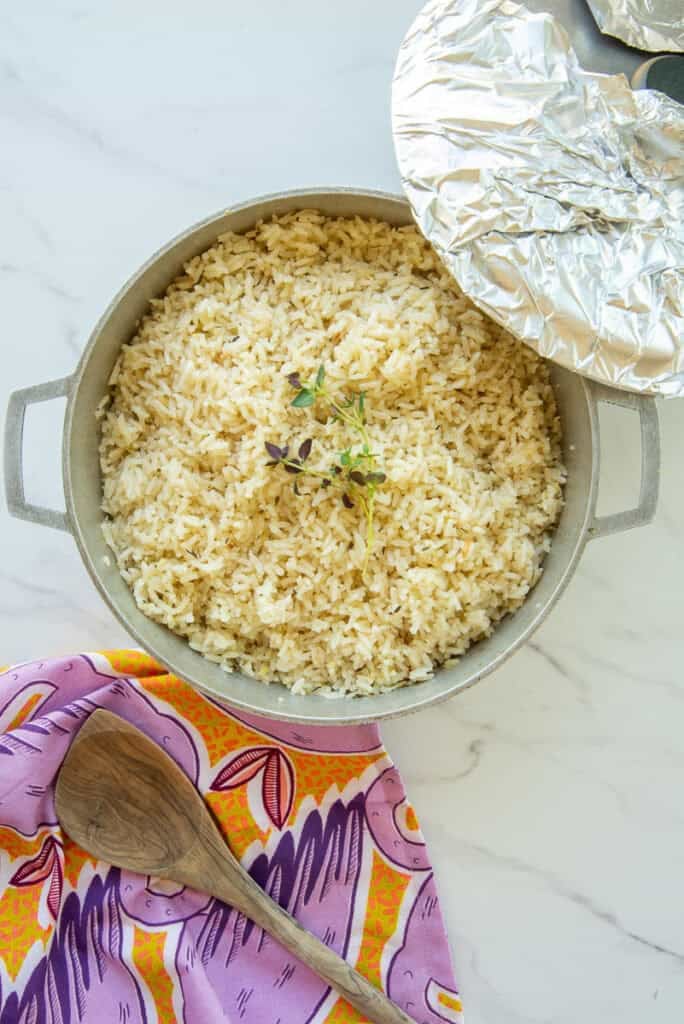
I’m sweet, but this rice ain’t. Don’t let your brain trick you into thinking “coconut = sweet”. This is a steadfastly savory recipe.
Coconut rice, also known in the Caribbean as arroz con coco, is a stoopid simple side dish of long-grain rice that’s toasted with aromatic vegetables like garlic and onion– here, we’re also adding a little ginger for brightness. Once the rice grains are toasty, fresh or canned coconut milk and flavorful broth are added to steam the rice.
The result is fluffy rice infused with a mild coconut flavor. Coconut rice is the perfect side dish to pair with spicy, saucy Caribbean proteins, but it also supports lighter, grilled or bake dishes like fish or chicken.
What makes this recipe one of my favorites is how easily it impresses without requiring too much effort on my part.
Arroz con Coco vs Arroz con Dulce: What’s the Difference?
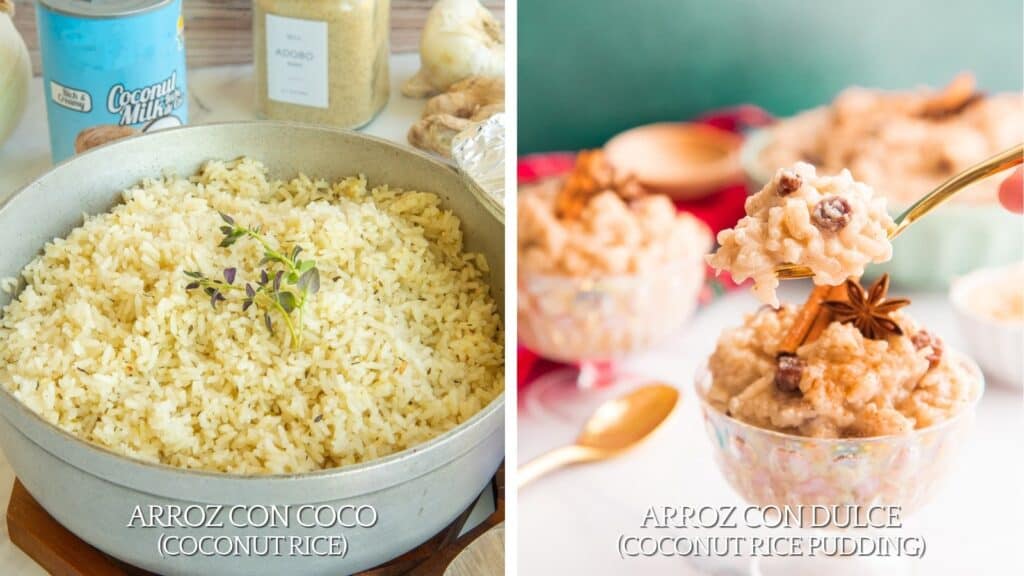
Unlike Arroz con Dulce, which is Puerto Rican coconut rice pudding, arroz con coco is devoid of sweetness. There is no sugar added to arroz con coco, whereas arroz con dulce adds sugar, as well as sweet raisins and spices like cinnamon and cloves, to create a dessert. Even the slight sweetness of the coconut milk is overpowered by the savory aromatics in this recipe.
This is a recipe for dinner or your grain bowls for lunch. Not for crying over after a breakup or the end of your favorite Shondaland series or serving with ripe mango, although… nah, never mind.
Ingredients To Make Caribbean Coconut Rice
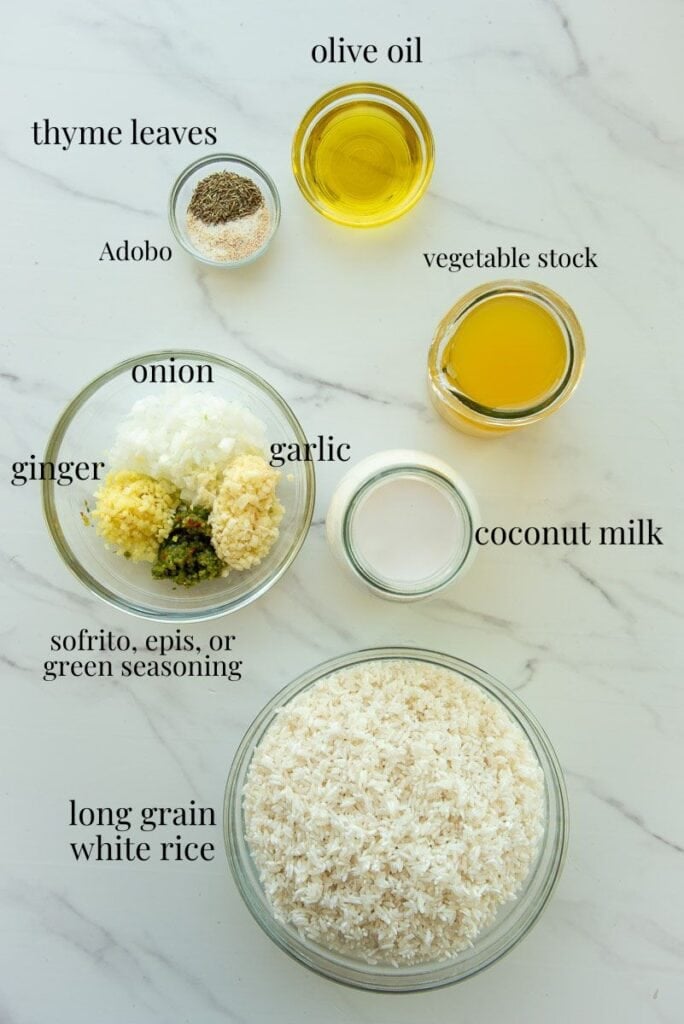
The ingredients you need to make coconut rice are long-grain white rice, sofrito, onion, garlic, ginger, coconut milk, vegetable broth (or chicken broth), adobo, thyme leaves, and olive oil (or a neutral cooking oil).
As written, this arroz con coco is a vegan recipe, but you can replace the complement your protein by using chicken or fish stock instead of vegetable stock in this recipe or make it less expensive by using water.
For more variety, consider adding toasted, unsweetened coconut flakes at the end of steaming to add texture and extra flavor to the coconut rice. Chopped cilantro, a squeeze of lime juice, or its zest is another good option for adding brightness to the rice.
Can You Make Arroz con Coco with
Jasmine or Basmati Rice?
I make my coconut rice with long-grain white rice because it’s less expensive than basmati or jasmine. It also has a very neutral flavor.
If you have jasmine or basmati rice on hand, you can totally use it to make arroz con coco. Jasmine rice will give the rice a mild floral flavor, but both are excellent swaps for the long-grain rice here. No other adjustments need to be made to the recipe, either.
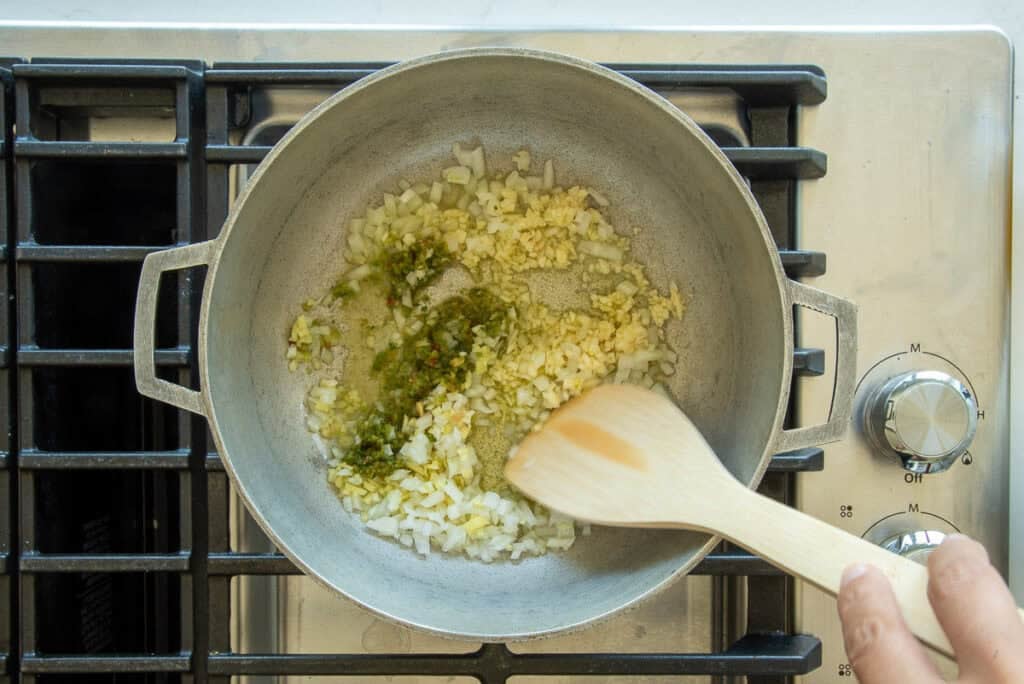
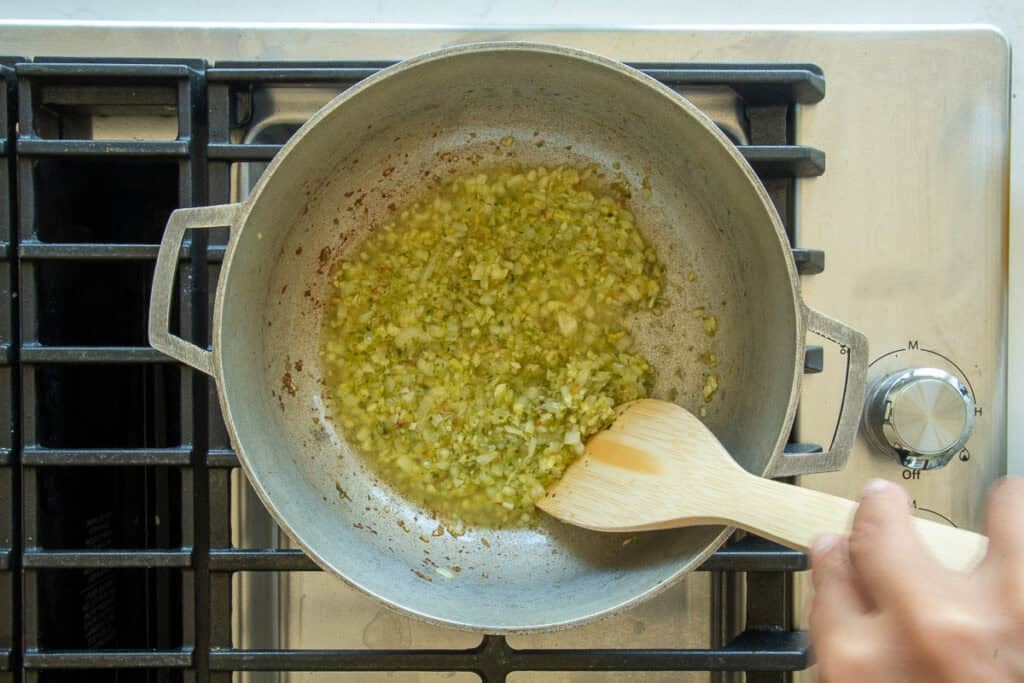
In a 4-quart caldero or similar pot with a heavy bottom and lid, turn the heat to medium-high. Add the olive oil over and heat it for about 30 seconds, then add the onion, garlic, ginger, and sofrito to the oil. Sauté the aromatics for 2-3 minutes, stirring often to bring out their flavors and lightly brown them.
Ginger is optional in this coconut rice recipe, but I’ve yet to meet someone who was mad I added it. Sofrito, green seasoning, or epis are all herbal seasoning bases that add a ton of Caribbean flavor with just a spoonful. You can omit this ingredient, but I hope you try it with it at least once.
The Method That Keeps Coconut Rice Fluffy,
Not Mushy
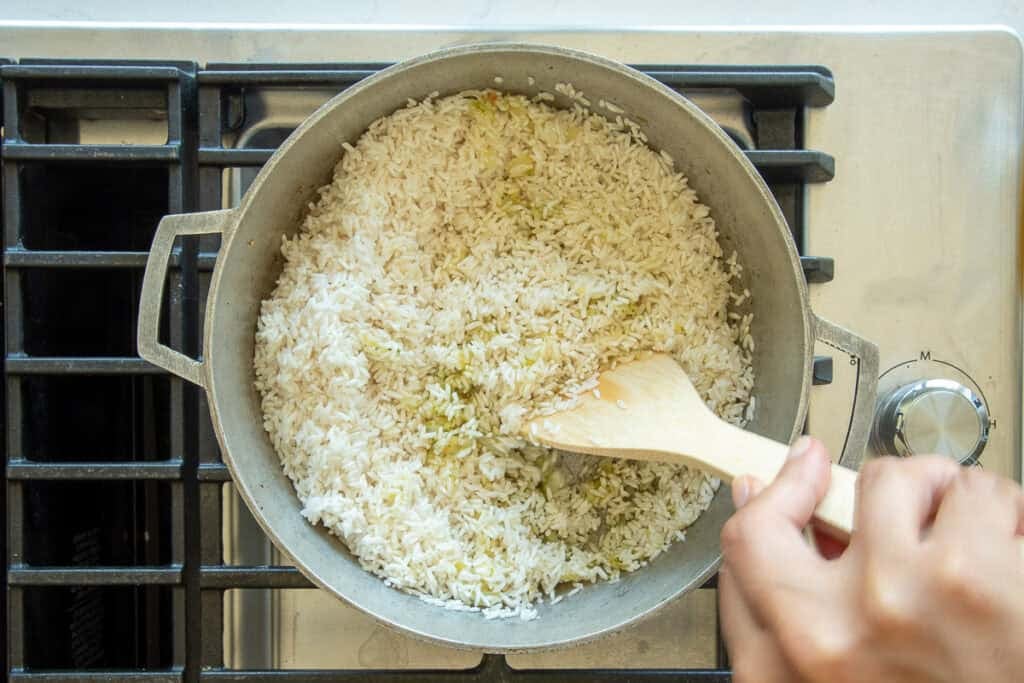
Unwashed rice and not toasting it are two of the biggest reasons your pot of rice comes out mushy instead of fluffy.
Washing the rice at least 4 times removes excess starch. The excess rice starch remains in the pot and acts as a thickener, similar to cornstarch. You end up with gloopy, mushy rice instead of separated, fluffy coconut rice if you don’t take the time to wash your rice.
Likewise, toasting your rice in aromatic oil coats the grains with fat, helping them remain separated as they steam in the pot.
Add the rinsed and drained rice to the caldero, then use your spoon to thoroughly toss the grains in the oil.
How To Balance The Coconut Milk Without
Making The Rice Heavy
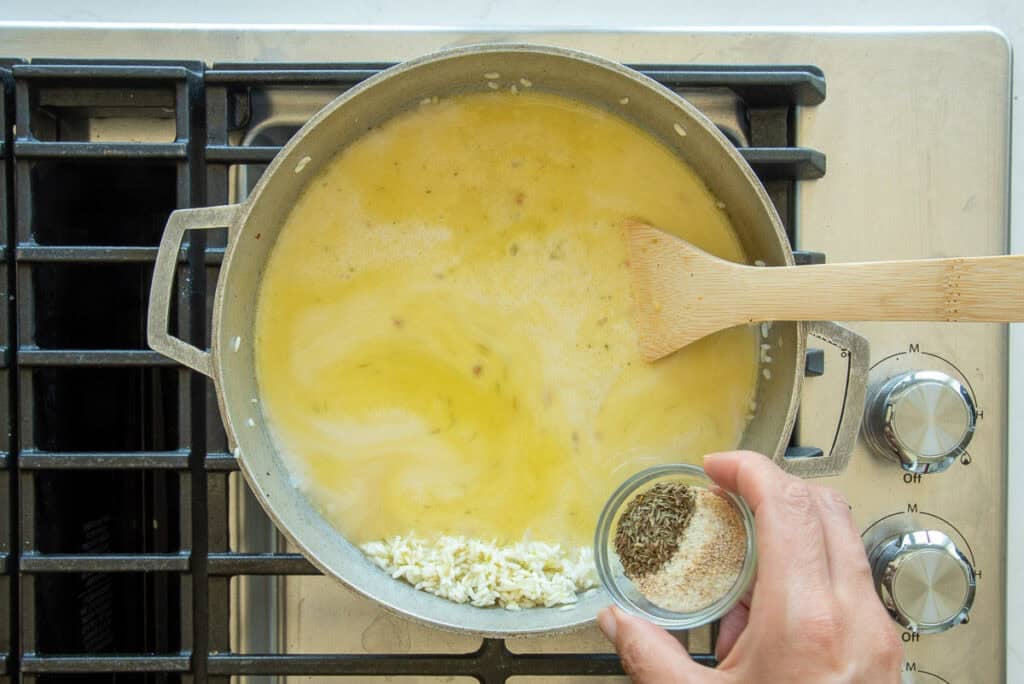
After you slang that rice around for about a minute, pour in the coconut milk and vegetable broth, then sprinkle in the thyme leaves and adobo.
Cutting that rich, creamy coconut milk with lighter, but still flavorful stock is how you create a well-balanced, coconut-infused rice that’s not heavy or too overwhelming with coconut flavor. It also reduces the likelihood of mushy coconut rice.
Stir in the liquids and seasonings, then bring to a boil.
Caribbean Coconut Rice Variations
(With Spice, Beans, or Heat)
This is the point where you can get creative with your arroz con coco. Consider using seafood or chicken stock to complement your seafood or poultry dishes. Give the arroz con coco more Hispanic Caribbean flair by replacing the dried thyme leaves with dried oregano or hoja santa.
To add more protein to your coconut rice, stir in a can of drained, rinsed pigeon peas or black, red kidney, or pinto beans. For spicy coconut rice, cut slits into a small scotch bonnet or habanero pepper and add it to the pot with the spices. Remove the pepper before serving– unless you got some crazy spice lover in your family.
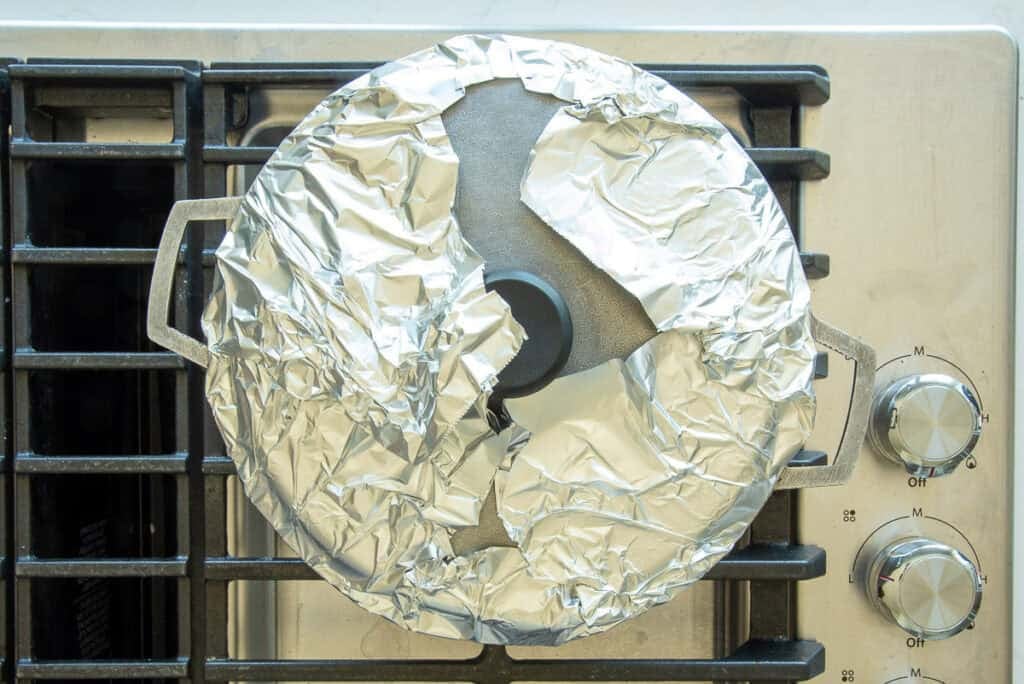
Allow the liquid to continue to boil until you can clearly see the grains of rice through the bubbles. Stir the rice once more, then reduce the heat to low.
Lay a square piece of aluminum foil over the top of the caldero. Press the lid down onto the foil to cover the caldero and create a tight seal. This step will help the coconut rice steam properly and decrease the chance of hard or gummy rice.
Steam the coconut rice on low heat for 25 minutes, or until tender.
Coconut Rice FAQs
What is the best coconut milk to use for coconut rice?
The best coconut milk for coconut rice is a can of full-fat coconut milk because it gives it the best flavor and texture. You can replace it with light or homemade coconut milk, but the rice will be less flavorful and slightly thinner in body.
Can I use canned coconut cream instead of coconut milk?
You can, but dilute the coconut cream with water. Since the cream is more concentrated, it can make the rice overly rich if used undiluted. Use 3/4 cup of coconut cream diluted with 1/4 cup of water to replace 1 cup (8 ounces) of coconut milk.
Why is my coconut rice too wet or undercooked?
This usually comes from too much liquid or lifting the lid too often during cooking. Let the rice cook undisturbed, then let it rest after cooking so it can finish absorbing moisture. If it’s still a little hard, add 1/2 cup of stock and steam for another 10 minutes.
Can I make coconut rice in a rice cooker?
Yes. Use the same ratios and add everything to the rice cooker. For better flavor, sauté the aromatics and toast the rice first, then transfer to the cooker.
Can I freeze coconut rice?
Yes. Let it cool completely, then store it in an airtight container for up to 2 months. Reheat with a little water or vegetable stock to achieve the desired texture.
What to Serve With Coconut Rice
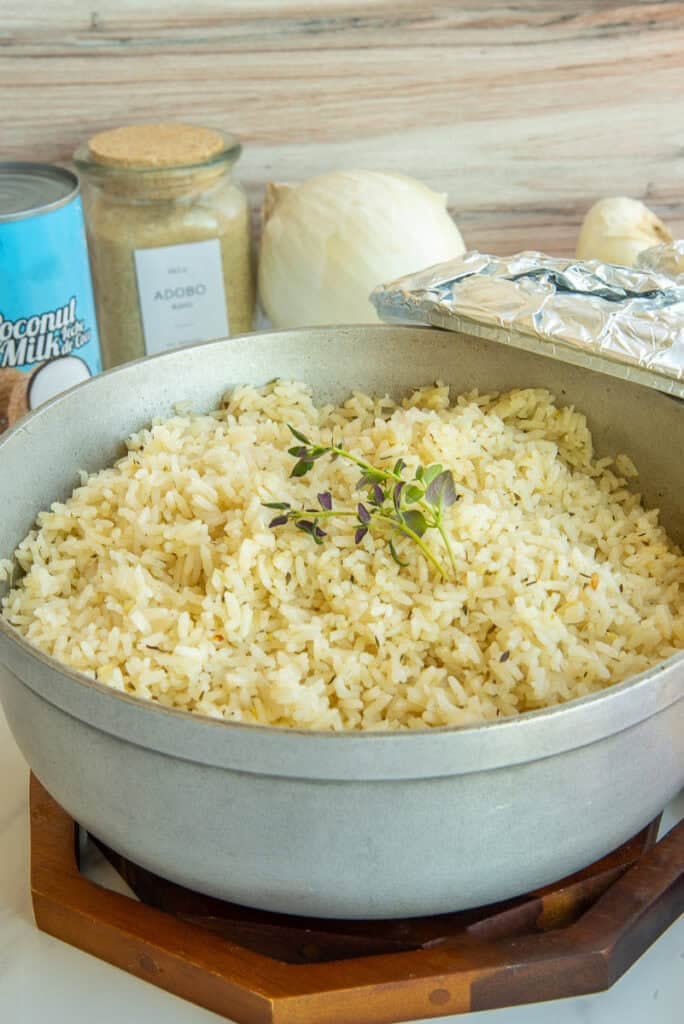
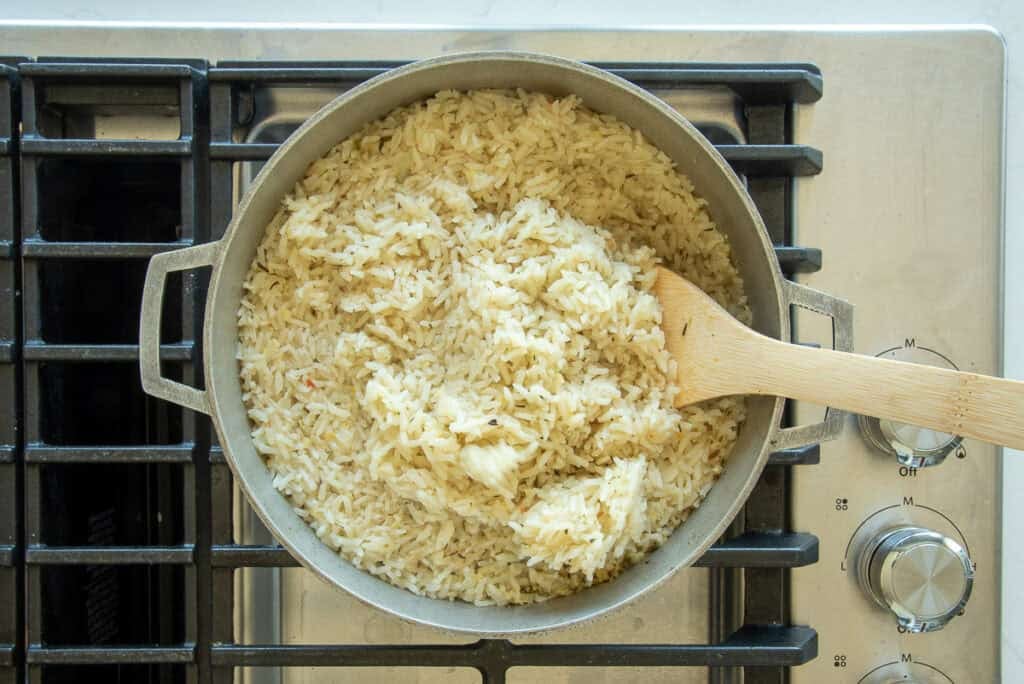
Once the rice is done, turn off the stove and fluff the grains with your spoon or a fork. Taste the rice and adjust the salt as needed. Cover the caldero again and allow the rice to continue steaming on the stovetop as it cools. This ensures tender rice with a fluffy texture (and gives you time to set the table).
When you’re ready to serve, you can garnish it with chopped fresh cilantro or leave it as is. Coconut rice is a complement to other richer dishes, not a bully. Its delicate flavor goes well with:
- Stewed chicken or braised meats
- Grilled or fried fish
- Shrimp or seafood dishes– especially those in garlic sauces
- Stewed beans
- Roasted or grilled vegetables
- Fried plantains
How to Store and Reheat Rice Without Drying It Out
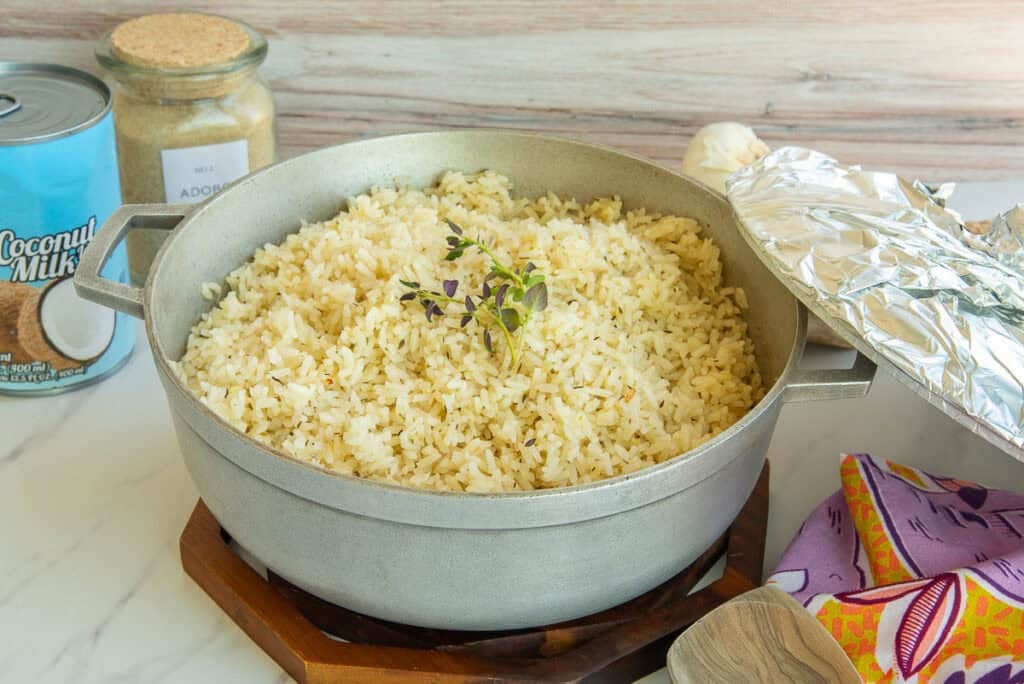
Storing leftover coconut rice is simple. Just transfer the leftover arroz con coco to an airtight container and store it in the refrigerator for up to 4 days. You can also freeze it for up to 2 months.
When you’re ready to reheat the rice, add a splash of water or stock to the container and heat it in the microwave for 1-2 minutes, or until warm. If you froze it, thaw it overnight in the fridge before reheating.
This Coconut Rice (Arroz con Coco) recipe is one of those dishes that looks simple but makes a statement with minimal effort. Once you dial in the method, it’s consistent, adaptable, and worth keeping in rotation. This will be a side dish you return to again and again. I hope you try it and, if so, let me know what you think of it down below.
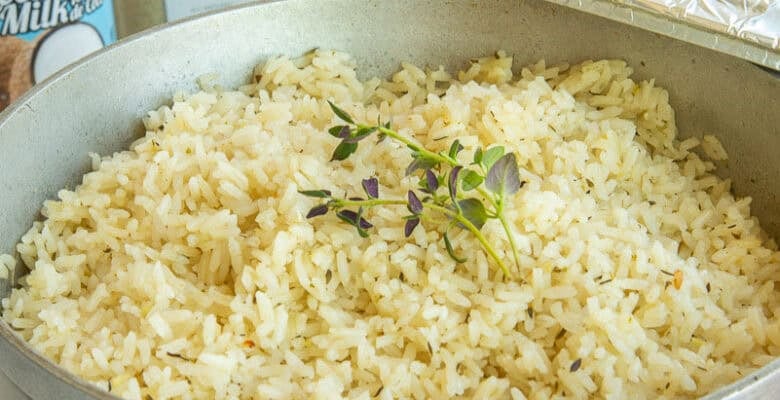
Coconut Rice (Arroz con Coco)
at Sense & EdibilityEquipment
- 4-qt caldero or heavy-bottomed pot with lid
Ingredients
- 3 tablespoons olive oil
- 1/2 small white onion peeled and minced (about 1/3 cup)
- 3 medium garlic cloves peeled and minced (about 1 1/2 tablespoons)
- 1/2-inch knob ginger peeled and minced (about 1 tablespoon), optional
- 1 tablespoon sofrito or green seasoning or epis, optional
- 2 1/2 cups long-grain white rice rinsed and drained 4 times
- 1/2 tablespoon adobo con pimienta or 2 teaspoons of kosher salt
- 13.5 ounce can coconut milk
- 1 1/4 cups vegetable stock or preferred stock or water
Instructions
Sauté the Aromatics
- In a 4-quart caldero or similar pot with a heavy bottom and lid, turn the heat to medium-high. Add the olive oil over and heat it for about 30 seconds, then add the onion, garlic, ginger, and sofrito to the oil. Sauté the aromatics for 2-3 minutes, stirring often to bring out their flavors and lightly brown them.
Toast the Rice
- Add the rinsed and drained rice to the caldero, then use your spoon to thoroughly toss the grains in the oil. After toasting the rice for a minute, pour in the coconut milk and vegetable broth, then sprinkle in the thyme leaves and adobo. Stir in the liquids and seasonings, then bring to a boil.
Boil, Then Cover and Steam the Rice
- Allowing the liquid to continue to boil until you can clearly see the grains of rice through the bubbles. Stir the rice once more, then reduce the heat to low.
- Lay a square piece of aluminum foil over the top of the caldero, then press the lid down onto the foil to cover the caldero and create a tight seal to help the coconut rice steam properly and decrease the chance of hard or gummy rice. Steam the coconut rice on low heat for 25 minutes, or until tender.
Fluff, Then Rest Before Serving
- Once the rice is done, turn off the stove and fluff the grains with your spoon or a fork. Taste the rice and adjust the salt as needed. Cover the caldero again and allow the coconut rice to continue steaming on the stovetop as it cools to ensure tender rice with a fluffy texture.
- When you're ready to serve, you can garnish it with chopped fresh cilantro or leave it as is.
Notes
- Replace the long-grain rice with basmati or jasmine.
- Use seafood or chicken stock, water, or coconut water in place of the vegetable stock.
-
You can replace the coconut milk with light or homemade coconut milk, but the rice will be less flavorful and slightly thinner in body.
- If you only have coconut cream, use 3/4 cup of coconut cream diluted with 1/4 cup of water to replace 1 cup (8 ounces) of coconut milk.
- Replace the dried thyme leaves with dried oregano or hoja santa.
-
Stir in a 15-15.5 ounce can of drained, rinsed pigeon peas or black, red kidney, or pinto beans.
-
For spicy coconut rice, cut slits into a small scotch bonnet or habanero pepper and add it to the pot with the spices. Remove the pepper before serving.
-
Rice Cooker Coconut Rice: Use the same ratios and add everything to the rice cooker. For better flavor, sauté the aromatics and toast the rice first, then transfer to the cooker. Cook as you normally do.
-
Washing the rice at least 4 times removes excess starch, which causes gloopy, mushy rice instead of separated, fluffy grains.
- Don’t use just coconut milk thinking you’ll get more coconut flavor. You’ll end up with pudding. Instead, replace the vegetable stock with coconut water.
-
For more variety:
-
Add 1/4 cup of toasted, unsweetened coconut flakes at the end of steaming to add texture and extra flavor to the coconut rice.
-
Stirring in one tablespoon of chopped cilantro or the juice of 1/2 a lime and its zest is another good option for adding brightness to the rice.
-
-
If the rice is hard after steaming, let the rice cook undisturbed, then let it rest after cooking so it can finish absorbing moisture. If it’s still a little hard, add 1/2 cup of stock and steam for another 10 minutes.
- Mushy rice is usually the result of too much liquid or lifting the lid too often during cooking.
-
Let the coconut rice cool completely, then store it in an airtight container for up to 2 months. Reheat with a little water or vegetable stock to achieve the desired texture.
-
You can also freeze coconut rice for up to 2 months. Thaw it overnight in the fridge before reheating.
-
When you’re ready to reheat the arroz con coco, add a splash of water or stock to the container and heat it in the microwave for 1-2 minutes, or until warm.