
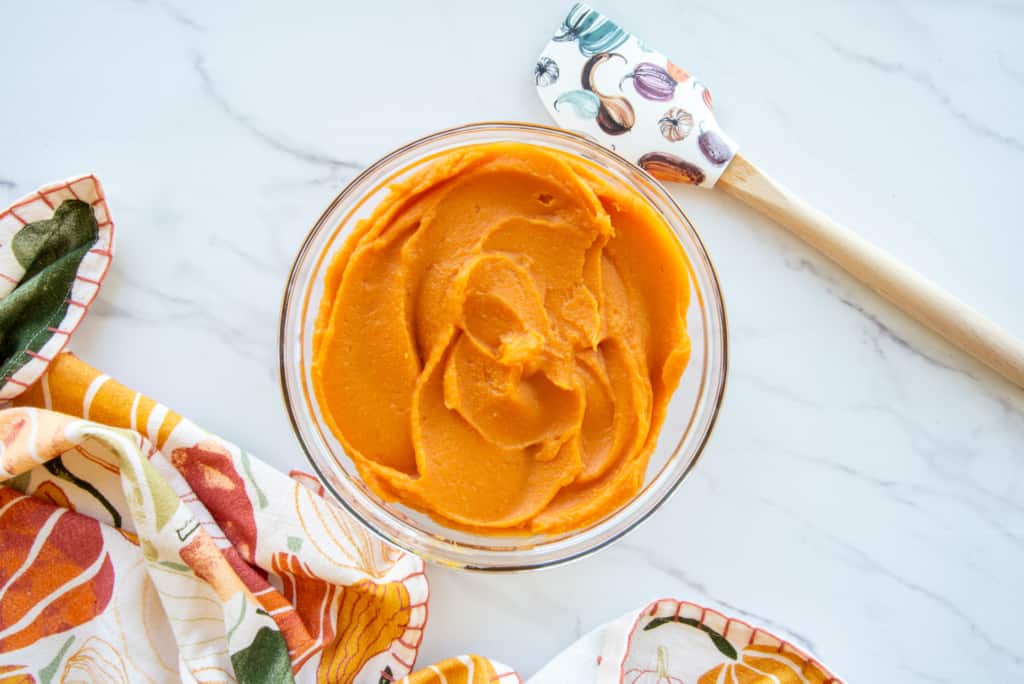
Homemade sweet potato puree is one of my favorite kitchen staples. I stopped buying canned sweet potatoes decades ago because the flavor was always a letdown… and I was poor. Roasting fresh sweet potatoes brings out their natural sweetness, and the puree is easy to make, budget-friendly, and so much more flavorful than the canned stuff. Level up the holidays by adding this recipe to your baking schedule.
This post was originally published in December 2020 and has been updated with new tips, storage guidance, and recipe ideas.

Why You’ll Love Homemade Sweet Potato Puree
- Way more flavor: if you’ve ever used sweet potatoes canned in syrup, you know how sickeningly sweet (and bland) they can be. Roasting brings out the sweet potatoes’ natural sweetness and nutty flavor instead.
- No added sugar or preservatives: canned sweet potatoes are often packed in sugary syrup you have to drain and rinse off. I think sweet potatoes are sweet enough on their own, and this puree is nothing but sweet potatoes.
- Budget-friendly: about 3 1/4 pounds of sweet potatoes gives you around 4 cups of puree, for less than you’d pay for the canned stuff.
- Freezer-friendly: portion it out once, stash it in the freezer, and you’re ready for pie season (and cheesecake season, and muffin season…).
- It works in everything: pies, cheesecakes, muffins, breads, soups, and even baby food.
What Are Sweet Potatoes?
Sweet potatoes are starchy root vegetables native to the Americas, and they’re at their peak in fall and winter. That makes them great for holiday baking.
Depending on the variety, their flesh can be off-white, yellow, purple, or deep orange, and their texture ranges from dry and fluffy to dense and moist. All varieties turn soft and sweeter as they cook, with a flavor similar to pumpkin and a hint of nuttiness.
Despite the name, sweet potatoes are only distant cousins of regular potatoes. Both belong to the plant order Solanales, but potatoes are in the nightshade family, while sweet potatoes are in the morning glory family. True yams are a different plant entirely. They’re starchier, drier, and less sweet, so they don’t swap well in most sweet potato recipes. (Those orange “yams” at most U.S. grocery stores, and in Granny’s casserole, are actually sweet potatoes.)
Sweet potatoes are low in fat, high in fiber, and rich in beta-carotene, the pigment behind their orange color. Your body converts beta-carotene into vitamin A, which supports healthy vision and immune function.
The Best Sweet Potatoes for Puree
Orange-fleshed Jewel and Beauregard are moist, sweet, and easy to find, which makes them top choices for puree. For a drier, denser, but just as sweet puree, use pale yellow-fleshed Satsuma-imo. That said, you can make this puree with any sweet potato.
Recipes like my sweet potato casserole work best with the less-sweet Boniato. For a strikingly beautiful puree, try purple-fleshed Okinawa sweet potatoes.
What You Need to Make Sweet Potato Puree

All you need is whole sweet potatoes and a little oil or cooking spray for the pan. Look for sweet potatoes that weigh 12 to 14 ounces each. I usually roast about 3 1/4 pounds (four large sweet potatoes), which gives me around 4 cups of puree.
Choose sweet potatoes that feel heavy for their size and have skins without too many blemishes or dry, dark spots. Skip any that are wrinkled, shriveled, or soft.
You’ll also need a sheet pan, a fork, a paring knife, a clean kitchen towel, and a potato masher, potato ricer, or food processor.
How to Make Sweet Potato Puree

Prep the Sweet Potatoes
Heat the oven to 400°F (204°C) and lightly grease a sheet pan with cooking spray or oil.
Scrub loose dirt from the sweet potato skins with a clean, damp kitchen towel, then dry them. Tear off any dry vines and use the tip of a paring knife to remove any eyes.
Arrange the sweet potatoes on the sheet pan and poke them all over with the tines of a fork. These vent holes let steam escape so your sweet potatoes don’t burst in the oven.
Roast Until Tender
Roast the sweet potatoes for 45 minutes to 1 hour, depending on their size. To test them, slide a paring knife into the thickest part. If it goes in and out without resistance, they’re done. If you feel any resistance, roast them for another 10 to 15 minutes and test again.
Steam and Peel

Take the sweet potatoes out of the oven and cover them with a clean kitchen towel. Steaming them under the towel loosens the skins and makes them easier to peel. Let them sit for 10 to 15 minutes, or until they’re cool enough to handle, then peel off the skins with your fingers and compost or discard them.
Mash or Puree

How you puree your sweet potatoes depends on how you plan to use them.
For a rough mash: Recipes where you want some texture, like casseroles or simple mashed sweet potatoes, only need a sturdy fork, a potato masher, or a potato ricer.
For a smooth puree: Cheesecakes, muffins, and pies rely on smooth batters, so use a food processor or blender to make your puree chunk-free. Food processors work best because of their wide bowls. If you use a blender, dice or roughly mash the sweet potatoes first, since the narrow carafe makes blending harder.
Let the sweet potatoes cool before pureeing; they’re easier (and safer) to handle, and you won’t trap steam in the food processor. Add the peeled, cooled sweet potatoes to the food processor and puree for 30 seconds. Scrape down the bowl, then puree for another 30 seconds to 1 minute, until really smooth.
How to Store Sweet Potato Puree

In the Fridge: Store sweet potato puree in an airtight container in the refrigerator for up to 4 days. If you won’t use it all in that time, freeze it.

In the Freezer: Portion the puree into freezer bags in 15-ounce (425g) or 1-cup (about 250g) amounts, since those are the quantities most recipes call for.
Label and date each bag, press out as much air as possible, and seal. Freeze the bags lying flat; once they’re frozen solid, you can stand them upright to save space.
Frozen sweet potato puree keeps for 2 to 4 months. Thaw it overnight in the refrigerator before using it.
Tips for Cooking and Baking with Sweet Potato Puree

- Bring it to room temperature. Cold puree can make batters and doughs curdle, so let it warm up on the counter before you start.
- Strain excess liquid. Frozen puree releases water as it thaws. Press it into a cheesecloth-lined sieve set over a bowl and let the liquid drain off so it doesn’t throw off your batter or dough.
- Swap it for pumpkin puree. Sweet potato puree can stand in for canned pumpkin in most recipes, cup for cup, like in my Pumpkin Chai Tres Leches Cake. Expect a slightly sweeter, denser result.
- Make extra. Because it’s so easy, I always make a big batch so I have puree ready whenever a recipe calls for it.
More Sweet Potato Recipes to Try
- Sweet Potato Cheesecake with Pecan Praline Topping
- Sweet Potato Maple Pecan Pie
- Sweet Potato Muffins with Chocolate Chunks
- Sweet Potato Butter Pecan Frozen Custard
- Sweet Potato Casserole with Coconut Pecan Topping
Baking a pie? Pair your puree with my mealy pie dough and a homemade pumpkin spice blend.
Sweet Potato Puree FAQs
Can I boil sweet potatoes instead of roasting them?
You can, but boiled sweet potatoes absorb water, which gives you a looser, blander puree. Roasting concentrates their flavor and sweetness, so it’s worth the extra time.
Can I make sweet potato puree in an Instant Pot or the microwave?
- Yes. For a pressure cooker, set whole, fork-pierced sweet potatoes on the trivet with 1 cup of water.
- Cook at high pressure for 25 to 30 minutes for 12- to 14-ounce sweet potatoes (smaller ones only need 15 to 20), then let the pressure release naturally for 10 minutes.
- In the microwave, poke the sweet potatoes all over and cook one on high for 8 to 10 minutes, turning it halfway through. Add a few minutes for each additional potato.
Do I need to peel the sweet potatoes before roasting them?
Nope. Roast them whole with the skins on. After they steam under the towel, the skins slip right off, which is much easier (and less wasteful) than peeling them raw.
How much puree does one sweet potato make?
One 12- to 14-ounce sweet potato makes about 1 cup of puree.
Is sweet potato puree the same as mashed sweet potatoes?
Not quite. Mashed sweet potatoes usually include butter, milk, and seasonings, while puree is plain cooked sweet potato, ready to use in any recipe.
Can I use canned sweet potatoes instead?
In a pinch, yes. If you’re using sweet potatoes (or “yams”) canned in syrup, drain and rinse them well, then puree them. Since they’ve already been sweetened, taste your batter and cut back on the sugar in your recipe if needed. Unsweetened canned sweet potato puree can be used as is. Just know it won’t taste as rich as homemade.
Why is my sweet potato puree stringy?
Some sweet potatoes, especially larger or older ones, are more fibrous than others. Even a food processor can’t break down every fiber, so press the puree through a potato ricer or a fine-mesh sieve for a silky-smooth result.
Why is my sweet potato puree watery?
Thawed or boiled puree tends to hold extra water. Strain it in a cheesecloth-lined sieve set over a bowl, or cook it in a nonstick skillet over medium-low heat, stirring often, until it thickens. Let it cool before using it in batters.
Can I use this sweet potato puree as baby food?
Yes! Plain sweet potato puree with no salt, sugar, or butter is a popular first food for babies who are starting solids. Thin it with breast milk, formula, or water to the consistency your little one needs, and freeze it in ice cube trays for easy single portions. Check with your pediatrician before introducing new foods.
Can I refreeze thawed sweet potato puree?
If you thawed it in the refrigerator, you can safely refreeze it, but it’ll get more watery each time. If it thawed on the counter and sat out for more than 2 hours, toss it. Microwave-thawed puree should be used right away.
Once you make your first batch of sweet potato puree, you’ll taste the difference in your desserts, breads, and side dishes. If you make this, leave a rating and comment below and tell me what you baked with it! Don’t forget to pin this post to your baking boards and share it with your sweet potato–loving friends and family!

Homemade Roasted Sweet Potato Puree
at Sense & EdibilityEquipment
- sheet pan
- kitchen towel
- potato masher, fork, or food processor
Ingredients
- 3 1/4 pounds sweet potatoes
- cooking oil for greasing the sheet pan
Instructions
- Preheat the oven to 400°F (204°C).
- Lightly grease a sheet pan with cooking spray or a light coating of vegetable or olive oil.
Wash and Dry the Sweet Potatoes
- Use a clean, damp kitchen towel to scrub loose dirt from the sweet potato skins and dry them with a clean kitchen towel. If your sweet potato has dry vines protruding, tear them off and discard them. Use the tip of a paring knife to remove any eyes from the potatoes.
Roast the Sweet Potatoes Until Fork-Tender
- Arrange the sweet potatoes on a sheet pan. Poke venting holes in the potatoes with the tines of a fork to allow steam to escape from the roasting sweet potatoes, which will keep them from exploding while they roast.
- Roast the sweet potatoes for 45 minutes to 1 hour. This roasting time varies depending on the size of the potatoes.To test if the sweet potatoes are tender, poke a paring knife into the thickest part of the potato. It's soft enough to remove from the oven if the knife slides in and out without resistance. Continue roasting the sweet potatoes for another 10-15 minutes if the knife meets any resistance when you poke the sweet potatoes.
Steam the Sweet Potatoes For Easy Peeling
- Remove the tender sweet potatoes from the oven and cover the pan with a clean kitchen towel to steam the sweet potatoes and loosen the skins, which makes them easier to peel. Allow the potatoes to steam under the towel for 10-15 minutes or until they are cool enough to handle.
- Use your fingers to remove the sweet potato peels and compost or discard them.
Mash or Puree the Sweet Potatoes
- Press the sweet potatoes through a potato ricer, mash with a potato masher or fork, or puree in a food processor.
- Recipes where you desire texture, like casseroles or simple mashed sweet potatoes, benefit from a rough mash, which you can accomplish with a sturdy fork or a potato masher.
- Use a blender or food processor to puree sweet potatoes you plan to use in cheesecakes, muffins, or pies. Since these recipes rely on smooth batters, you want to make your puree chunk-free.Add the peeled, cool sweet potatoes to the food processor and puree them for thirty seconds, scrape down the bowl, and puree for 30 seconds to 1 minute, or until really smooth.
Use or Store
- Use right away, or cool completely and refrigerate or freeze.Sweet potato puree is best used in soups, bisques, breads, pies, and even as baby food.
Notes
- Jewel, Okinawa, and Satsuma-imo are suitable substitutes for Beauregard sweet potatoes.
- Boniato sweet potatoes are ideal when preparing puree for savory or less sweet recipes.
- Purchase sweet potatoes that are heavy for their size and have peels without too many blemishes or dry dark spots. Avoid sweet potatoes that are wrinkled, shriveled, and soft.
- Let the sweet potatoes cool before pureeing; they’re easier (and safer) to handle, and you won’t trap steam in the food processor.
- Blenders aren’t as efficient because of their narrow carafes, so I recommend dicing or roughly mashing the sweet potatoes before adding them to the machine. With their wider bowls, food processors are more efficient in pureeing sweet potatoes.
- Always bring your sweet potato puree to room temperature before using it in recipes to prevent batters or doughs from curdling.
- Strain excess liquid from the sweet potato puree before using it in recipes to avoid creating an imbalance in your dough or batters.
- Store sweet potato puree in an airtight container in the fridge for up to 4 days. If you won’t use it all in that time, freeze it.
- Store sweet potato puree in a freezer food storage bag in 15-ounce (425g) or 1-cup (250g) quantities, since most recipes call for these amounts.
- Label and date the bags of sweet potato puree, then press out as much of the air from the bag as possible before sealing them. Freeze sweet potato puree for 2-4 months.
- If you freeze the bags of sweet potato puree lying flat, when they’re frozen solid, you can stand them up in the freezer, which takes up less space.
- Thaw the puree in the refrigerator overnight before bringing it to room temperature and using it as instructed in your recipe.
- Strain off excess liquid, which develops when the water in the potatoes freezes and thaws, by pressing the sweet potato puree into a cheesecloth-lined sieve and allowing the excess liquid to drip into a bowl beneath.





Just made my first pureed sweet potatoes and your instructions are fantastic – as a previous post advised, I will be referring to your site again and again.Thank you so much. Now to make my first Sweet potato muffins.
Thank you for your support, Estelle!
I’m going to have to prep and freeze some of this to have on hand. The canned stuff is just bleh! Thanks for sharing!
This is surely the most comprehensive resource on creating sweet potato puree. I’ll refer to it again and again!
I’m so glad you find it helpful, Helen!
Ummm hello YUM!! I can totally see me just eating this straight out of the container!!
LOL!! I usually use them for baking or cooking, but can totally see myself doing that, too.
Wow! That’s pretty easy that all you need are sweet potatoes. I love anything with sweet potatoes so I will have to try this out!
Yes, get them pureed for your holiday baking!
It is so hard for me to believe that there was a time I didn’t like sweet potatoes! I can’t live without them now! I loved this sweet potato cheesecake – wow!
I, too, wasn’t always a big fan of sweet potato, but I think it was the way they were made that threw me off. So glad you liked it.